500 Rule Calculator: Max Exposure Before Star Trails
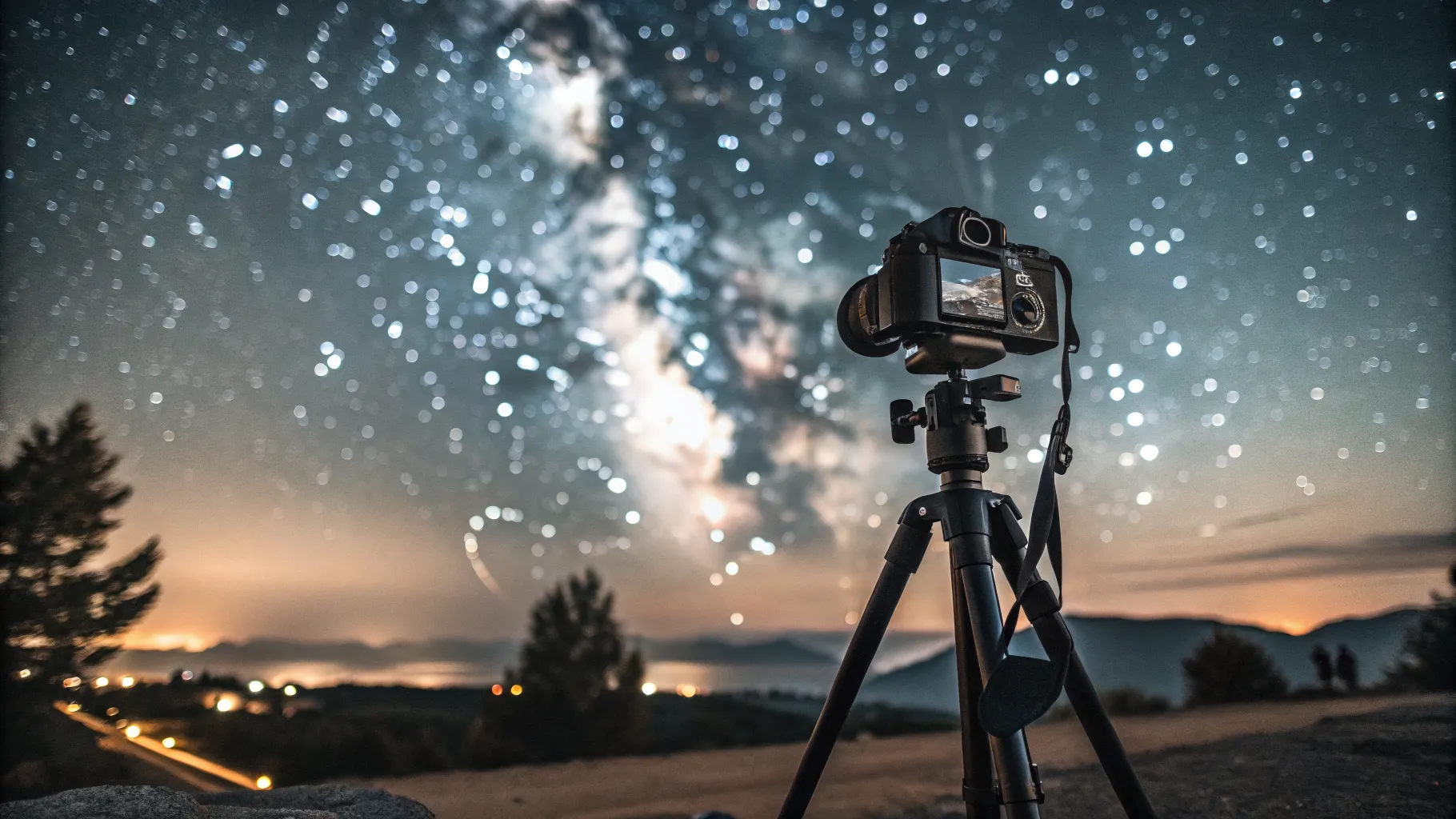
When the camera is on a fixed tripod, the Earth keeps turning, so leave the shutter open too long and the stars smear into short streaks. This works out your longest safe exposure two ways: the quick 500 rule, and the sharper NPF rule that also accounts for your sensor's pixel size and aperture. The catch with the 500 rule: it was written for full-frame film, so on a crop sensor or a high-resolution camera it is often too generous and stars still trail.
Your camera and lens
The two rules answer the same question differently. The 500 rule just divides 500 by the full-frame-equivalent focal length, so a 24mm lens on full frame gives 500 ÷ 24, about 20 seconds. It is easy to remember and fine for small prints and wide lenses, but it ignores how tightly your sensor records detail. The NPF rule factors in the pixel pitch and aperture, so on a modern high-resolution body it usually returns a shorter, stricter time that keeps stars as crisp points when you zoom in to 100 percent.
Not sure of your pixel pitch? It is the physical width of one pixel on the sensor in microns. You can look it up for your camera model, or estimate it: divide the sensor width in millimetres by the horizontal pixel count, then multiply by 1000. A full-frame 24-megapixel body is around 5.9 microns; a 45-megapixel one is around 4.3. Leave the field blank and you will still get the 500 rule figure.
For genuinely round stars at any focal length, a star tracker beats both rules: it turns the camera with the sky so you can expose for minutes, not seconds, and gather far more light.
Clear skies forecast? Get a nudge.
Our weekly email flags the next good UK observing window and one easy target to find.
Join the listMore from Starvest
Keep reading
Best Telescopes for Beginners in the UK (Tested by Price Bracket)
The best beginner telescopes in the UK by budget, from sub-£150 tabletop scopes to app-guided and smart telescopes, with real 2026 prices.
What Can You See with Binoculars at Night? A Realistic Astronomy List
A realistic list of what you can see with binoculars in astronomy, from the Moon and Jupiter's moons to Andromeda, with tips for spotting each from the UK.
How to Set Up and Use Your First Telescope (Step by Step)
How to use a telescope as a beginner: assemble the mount, align the finder, focus, and find your first targets. A clear step-by-step UK guide.