Stargazing in Wales: The 4 Accredited Areas and Best Spots
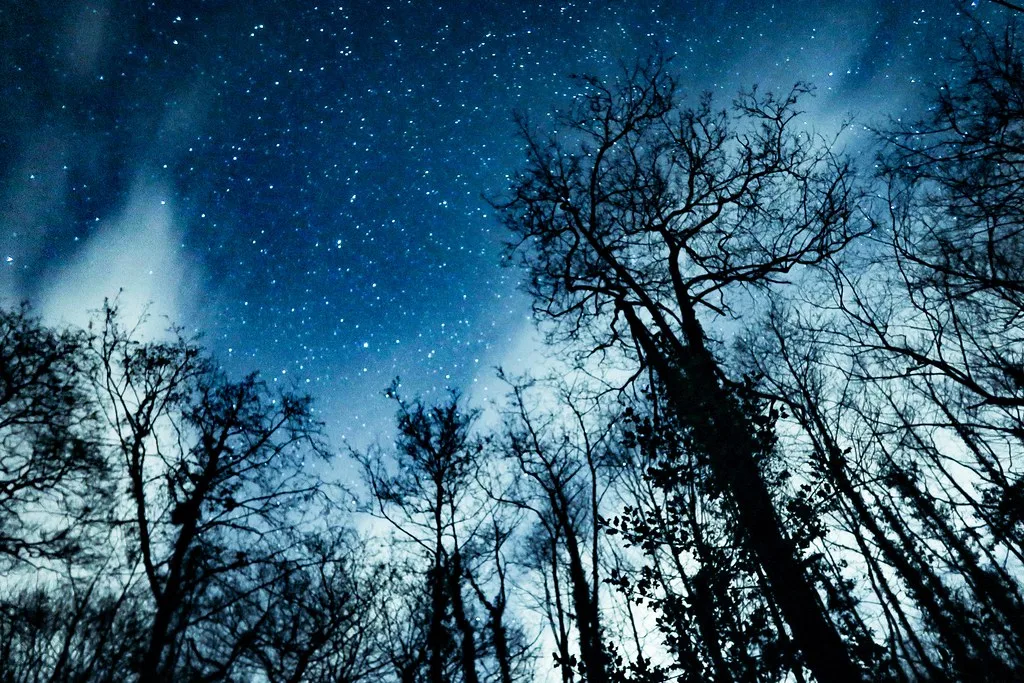
Stargazing in Wales is easier than in most of Britain for a simple structural reason: the population sits along the south coast and the north coast, and the middle of the country is close to empty. That leaves a broad diagonal band of genuinely dark ground running from the Cambrian Mountains down into the western half of Bannau Brycheiniog, with almost nothing in it to make light. You do not have to drive to the end of the world to find sky here. You have to know which car park to stop in.
Wales also has more formal accreditation per square mile than anywhere else in the UK. Four places hold international status, and they were awarded under three different categories, which tells you something useful about what each one is actually like. This page runs through all four, then the unaccredited spots worth knowing, with the road, the parking and the honest trade-off for each. The certification tiers themselves are explained in our guide to the UK’s dark sky sites, and the equivalents over the border are in stargazing in England and stargazing in Scotland.
The four accredited places, and what the labels mean
- Bannau Brycheiniog (Brecon Beacons), International Dark Sky Reserve, 2013. The national park authority’s own announcement records it as the fifth reserve in the world.
- Eryri (Snowdonia), International Dark Sky Reserve, December 2015. Around 823 square miles, and the tenth reserve worldwide at the time.
- Elan Valley Estate, International Dark Sky Park, July 2015. Silver tier, 45,000 acres, and the first privately owned but publicly accessible estate in the world to be certified.
- Ynys Enlli (Bardsey Island), International Dark Sky Sanctuary, February 2023. The first sanctuary in Europe and, at the time, the seventeenth in the world.
A reserve is a large area with a protected dark core and a populated buffer around it. A park is a single landholding managed for dark sky. A sanctuary is the strictest of the three and is reserved for remote sites with exceptional skies, which is why there is exactly one in Europe and it is on a small island you can only reach by boat.
Bannau Brycheiniog: the reserve most people can get to
The reserve is big and the sky is not uniform across it. Merthyr Tydfil, Ebbw Vale and the M4 corridor sit just off the southern edge, so the further west and north you go inside the park, the better the result. These are the sites with real parking.
Usk Reservoir is the pick if you only make one trip. It sits in the west of the park, reached from the Trecastle area off the A40, with a proper car park and a dam you can walk out onto for a horizon in both directions. Being on the far side of the Black Mountain from the valleys is what does the work: the ridge blocks the light dome that spoils the southern sites.
Craig-y-nos Country Park in the upper Swansea Valley is among the darkest spots in the park and has the advantage of being a managed country park rather than a lay-by, with a car park and marked paths. Check the closing arrangements before you plan a late night, because barriers at country parks catch people out.
Llangorse Lake has plenty of parking and easy access, and the water gives you a low, clear eastern horizon. It is popular and it is closer to Brecon, so expect company and a little more sky glow than Usk.
Pontsticill Reservoir is the closest usable option to Merthyr Tydfil, with parking along the banks. Treat it as the convenient choice rather than the dark one.
The National Park Visitor Centre at Libanus, signposted from the A470, is the easiest of the lot: about an hour from the valleys, with proper public access and a car park. Visit Wales records a limiting magnitude of 6.37 there, meaning the faintest star visible to the naked eye on a good night is about magnitude 6.4. That is a strong number for somewhere this accessible.
Llyn y Fan Fach and Pen y Fan both appear on every list of Welsh stargazing spots and both are superb. They are also walks, uphill, in the dark, on ground where people get into trouble in daylight. Do them only if you would be comfortable doing the same route at night without a telescope.
Eryri: dark sky in a landscape built to block your horizon
Eryri is the reserve where site choice matters most, because mountains that make the sky dark also take large bites out of it. A valley floor at the bottom of a 900m wall gives you a beautiful dark strip of sky and not much else. The park’s recognised sites are chosen to get around that, and they are mostly lakes, because a lake is a flat clearing.
Llyn Geirionydd, in the Gwydyr Forest above Betws-y-Coed near Trefriw, has public parking, toilets and picnic benches, and local astronomers rate it as the clearest sky in the park. If you want one address in north Wales, this is it.
Llyn y Dywarchen sits alongside the B4418 above Drws-y-Coed in Dyffryn Nantlle, just off the A4085 between Beddgelert and Caernarfon, with an adjacent car park. It is a fishing lake, so the ground is level and the approach is easy.
Tŷ Cipar is a former gamekeeper’s house high on the Migneint, the blanket bog between Ysbyty Ifan and Llan Ffestiniog, on the B4407. It is the remotest of the three and the one to pick when you want darkness over convenience. There is nothing there. Bring everything.
Elan Valley: the darkest thing in mid Wales with a visitor centre attached
The Elan Valley Estate is 45,000 acres of reservoirs and moorland run by Dŵr Cymru Welsh Water, and its silver tier park status covers the whole of it. The case for certification was built on more than 200 light readings taken at 13 sites across nearly two years, which is a more thorough evidence base than most designations rest on.
What makes it useful in practice is that it is an estate rather than a wilderness. There is a visitor centre, a road through the valley with parking along it, and dams that function as ready-made observing platforms with open sky above the water. You can arrive at dusk, park, and be set up in ten minutes. Very few genuinely dark sites in Britain let you do that.
Ynys Enlli: the best sky in Wales, and the hardest to use
Ynys Enlli, or Bardsey Island, off the tip of the Llŷn Peninsula, was certified on 23 February 2023 after a four-year monitoring programme, and DarkSky International’s announcement confirms it as Europe’s first sanctuary. Sanctuary status is not handed out for being quite dark. It means the sky is close to as good as it gets anywhere.
The catch is real: it is a boat crossing, accommodation is limited and books up far ahead, and the weather cancels sailings. This is a trip you plan months out, not a Tuesday night. If you cannot get out there, the mainland tip of the peninsula at Mynydd Mawr looks out across the sound in the same direction with the island’s darkness beyond it, and you can drive to it.
The unaccredited spots that are still worth the drive
Llyn Brianne, in the Cambrian Mountains, became a Dark Sky Discovery Site in October 2019, the first in the range, and sits in what is measured as a Bortle 2 area. Bortle 2 is the second darkest class on the nine-point scale and is rare in Britain. The Cambrians around Llyn Brianne and the western half of Bannau Brycheiniog are the two darkest accessible places on the Welsh mainland, and they are next to each other.
Coed y Bont near Pontrhydfendigaid is Ceredigion’s Dark Sky Discovery Site, with forest tracks and a car park, and Ynyslas dunes north of Borth give you flat ground and a sea horizon with no climb involved.
In Pembrokeshire, the national park authority and the National Trust have built what they describe as a necklace of Dark Sky Discovery Sites around the coast. Broad Haven South is the flagship: a National Trust clifftop car park with a full 360 degree horizon and the Milky Way visible to the naked eye on a clear night. Skrinkle Haven has a car park in a wide open grass area with especially good southern sky, because there is only sea in that direction. Garn Fawr, near the summit of the road between Garn Fawr and Garn Fechan, gets you height and isolation in the north of the county.
On Anglesey, Newborough Forest gives sheltered coastal viewing with the Llŷn mountains blocking nothing to the south, and it is the practical option for anyone based on the north coast.
Choosing your night
The dark sky designation tells you about the site. It tells you nothing about tonight. Three things decide whether the trip is worth making:
- The moon. A full moon washes out everything faint no matter where you stand. Aim for the week around new moon.
- The season. October to March gives you long nights and the Milky Way core is gone by then, but the winter sky is the richer one for a beginner: Orion, the Pleiades, Andromeda and Jupiter all sit high.
- The weather. Wales is wet, and the mountains make their own cloud. Check a forecast that gives cloud cover by layer rather than a single symbol for the day.
Coastal sites bring one extra problem worth planning for. You get a superb low sea horizon, and you get dew, which will fog an eyepiece or a lens inside an hour. Take something to keep the optics dry.
If you are new to this, go with binoculars before you go with a telescope. A pair of 10x50s under an Elan Valley sky beats an expensive instrument you are still learning to point, and there is a lot to see: our notes on what to look for with the naked eye and binoculars for stargazing cover the first few nights. A stargazing app on red-light mode will tell you what you are looking at.
Frequently asked questions
Where is the darkest sky in Wales? Ynys Enlli (Bardsey Island) off the Llŷn Peninsula, which holds International Dark Sky Sanctuary status. On the mainland, where you can drive, the Cambrian Mountains around Llyn Brianne and the western half of Bannau Brycheiniog near Usk Reservoir are the darkest accessible areas.
How many dark sky places does Wales have? Four with international accreditation: two reserves (Bannau Brycheiniog and Eryri), one park (Elan Valley Estate) and one sanctuary (Ynys Enlli). There are also a number of smaller Dark Sky Discovery Sites, including Llyn Brianne, Coed y Bont and the Pembrokeshire coastal sites.
Do I need to pay or book to stargaze at these sites? The car parks listed here are public and free to use at night in most cases, though some country parks and forest car parks have barriers and charges, so check before you commit to a late finish. Organised events with telescopes and a guide are usually ticketed and do need booking.
What is the best time of year for stargazing in Wales? October to March. The nights are long enough to observe at a sensible hour, the air is generally clearer than in summer, and the winter constellations are the easiest ones to learn. Midsummer in Wales barely gets astronomically dark at all.
Can I see the Milky Way in Wales? Yes, from any of the accredited areas on a clear moonless night, and at certified sites such as Broad Haven South it is visible to the naked eye. You will see it best from late summer into autumn, when the brightest part of it sits low in the south after dark.
Is stargazing safe on the mountains at night? Treat a night walk as a full hill walk. Pen y Fan and Llyn y Fan Fach are wonderful spots and both involve rough ground in the dark. If you want the sky without the risk, use the reservoir and lakeside car parks instead, which give you almost the same darkness with a car ten steps away.
Clear skies forecast? Get a nudge.
Our weekly email flags the next good UK observing window and one easy target to find.
Join the listMore from Starvest
Keep reading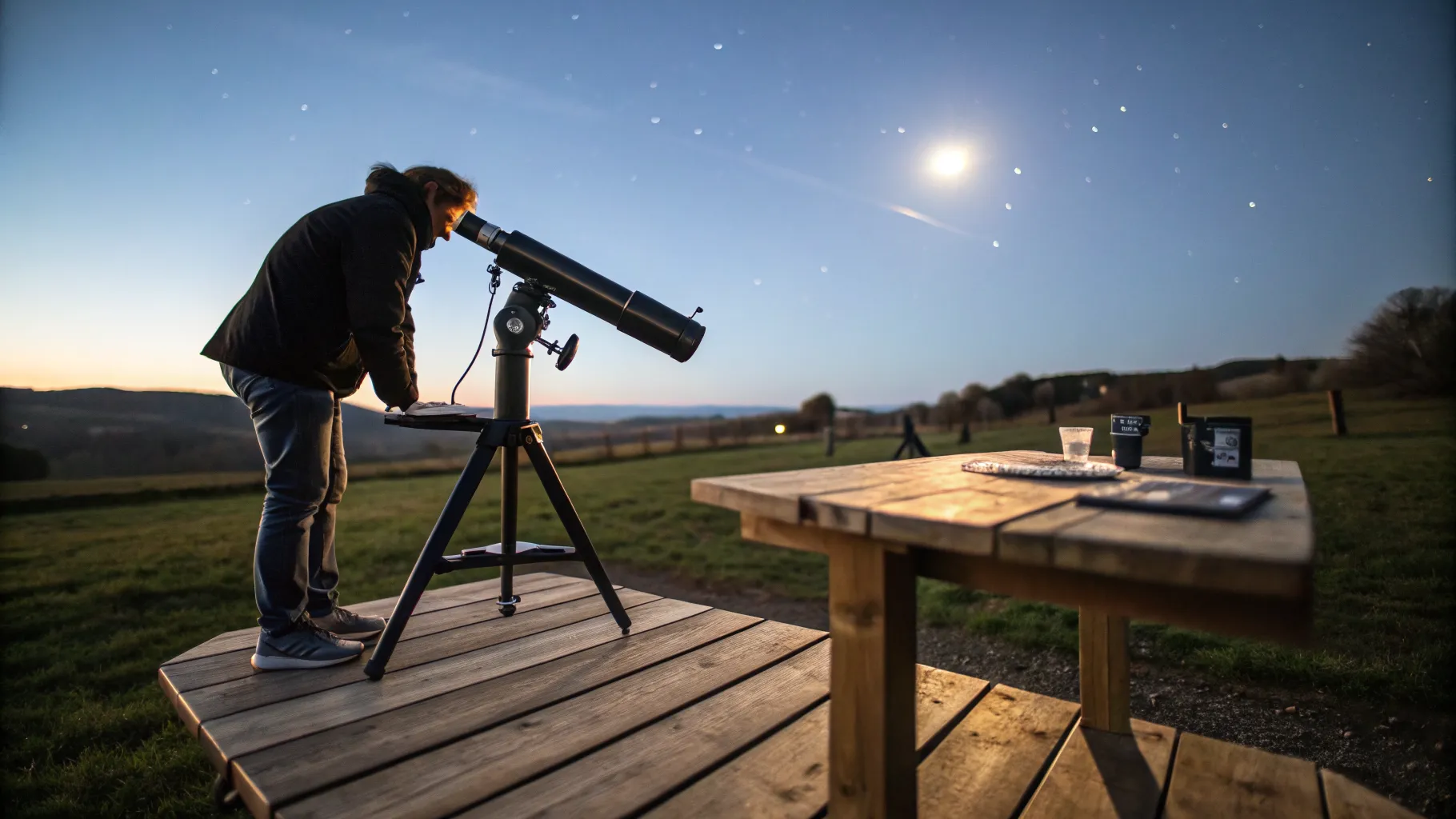
Best Telescopes for Beginners in the UK (Tested by Price Bracket)
The best beginner telescopes in the UK by budget, from sub-£150 tabletop scopes to app-guided and smart telescopes, with real 2026 prices.
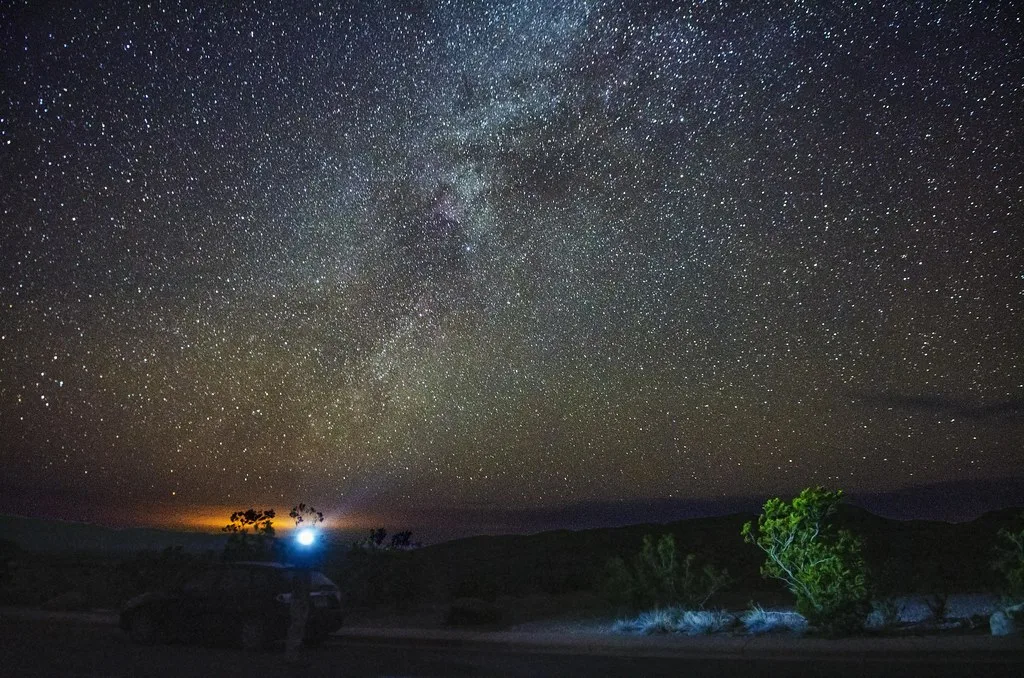
What Can You See with Binoculars at Night? A Realistic Astronomy List
A realistic list of what you can see with binoculars in astronomy, from the Moon and Jupiter's moons to Andromeda, with tips for spotting each from the UK.
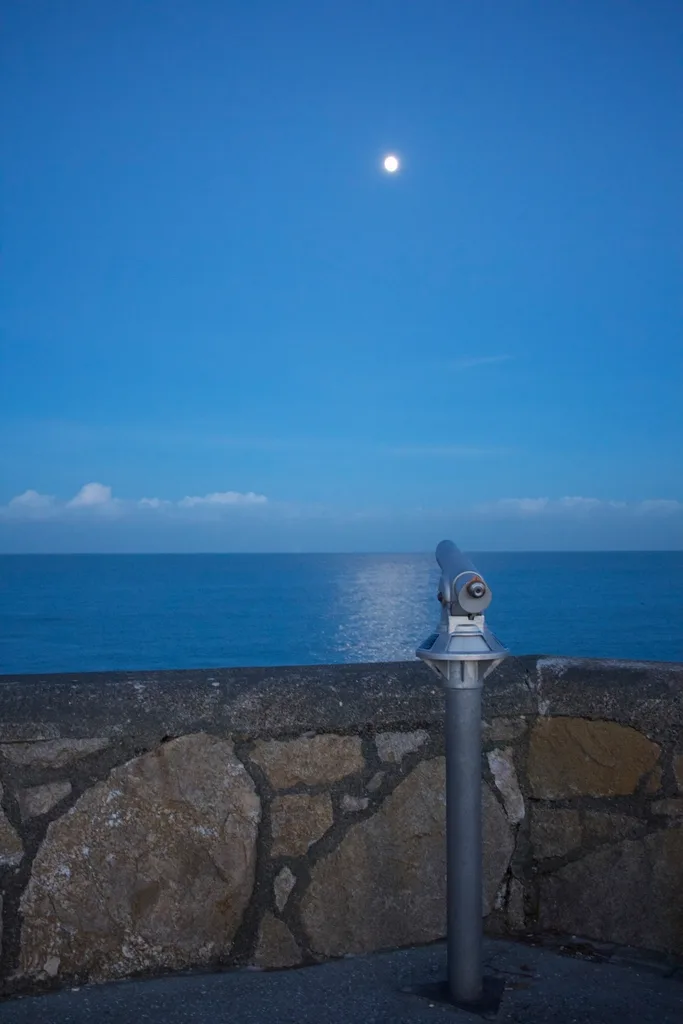
How to Set Up and Use Your First Telescope (Step by Step)
How to use a telescope as a beginner: assemble the mount, align the finder, focus, and find your first targets. A clear step-by-step UK guide.