Bortle Scale Calculator: How Dark Is Your Sky?
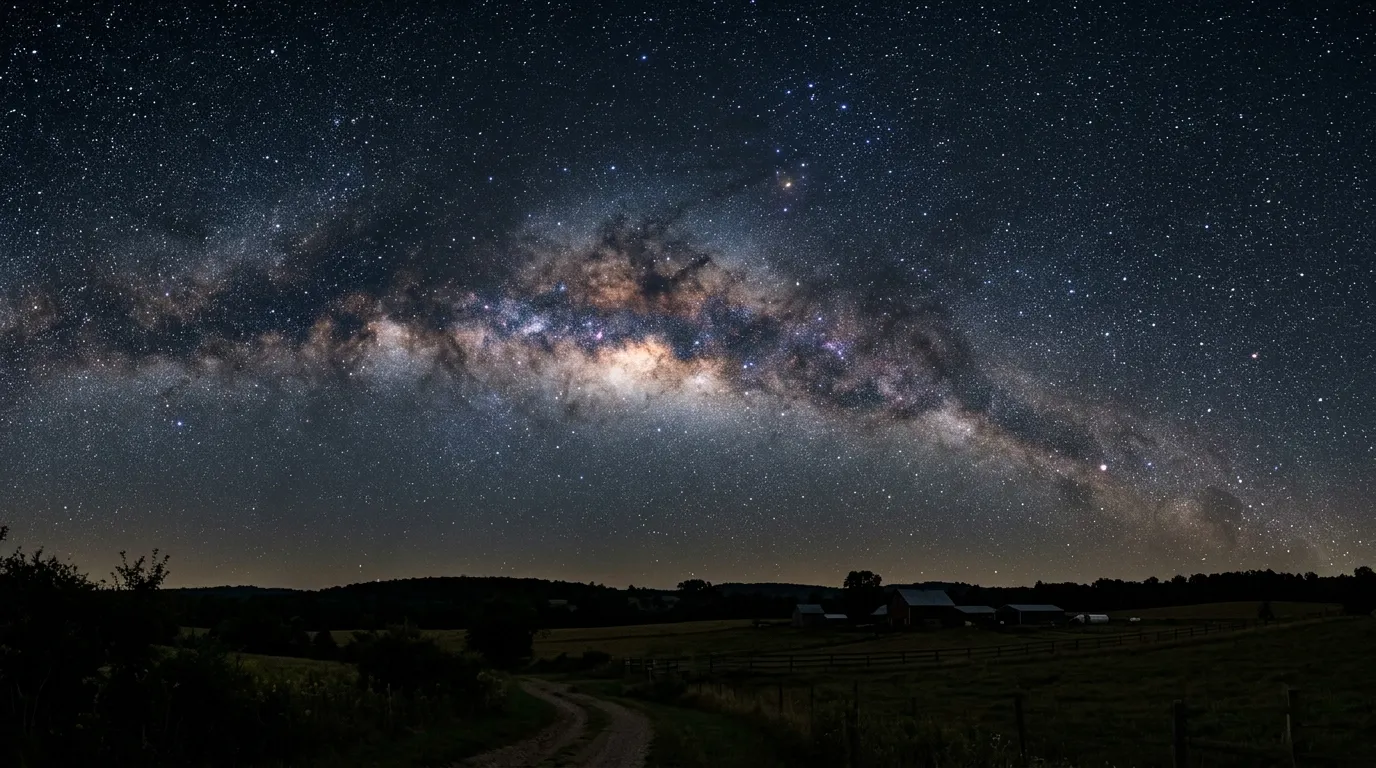
The Bortle scale runs from Class 1 for the darkest possible sky to Class 9 for an inner-city sky. Rather than guess, answer a few questions about what you can actually see overhead and this estimates your class, your naked-eye limiting magnitude, and what is realistically within reach. The single best test is the Milky Way: if you cannot see it at all, you are in suburban skies or worse.
What can you see overhead on a clear, moonless night?
Let your eyes adapt to the dark for 15 to 20 minutes first, then look straight up.
The Bortle scale was devised by amateur astronomer John Bortle and published in Sky & Telescope in 2001. It is a judgement based on what the unaided eye can see, so two people can rate the same sky a class apart; treat the result as a sensible estimate, not a measurement. For an objective reading, a sky quality meter gives a number in magnitudes per square arcsecond, and many UK dark-sky reserves publish their typical figures.
Clear skies forecast? Get a nudge.
Our weekly email flags the next good UK observing window and one easy target to find.
Join the listMore from Starvest
Keep reading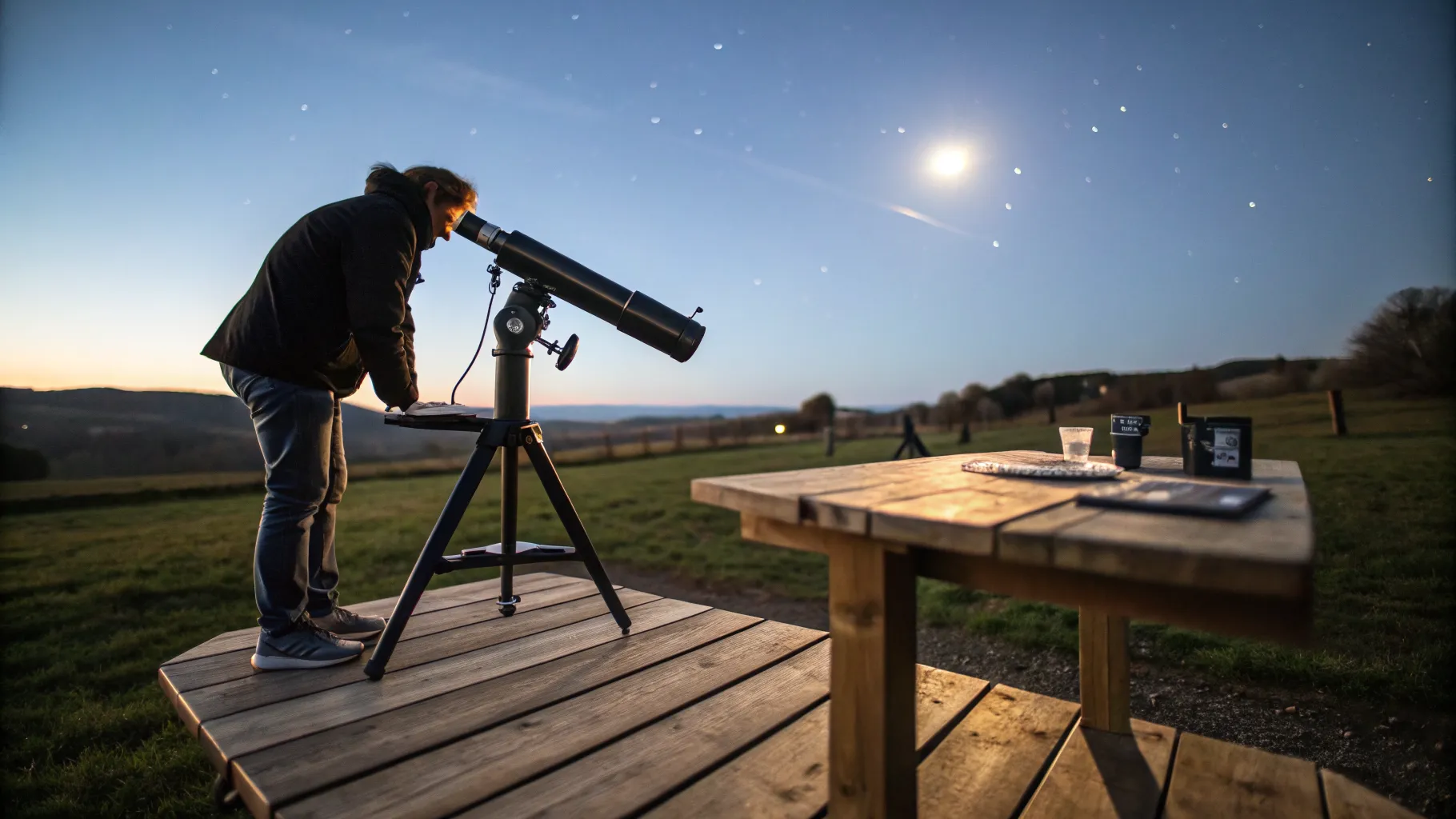
Best Telescopes for Beginners in the UK (Tested by Price Bracket)
The best beginner telescopes in the UK by budget, from sub-£150 tabletop scopes to app-guided and smart telescopes, with real 2026 prices.

What Can You See with Binoculars at Night? A Realistic Astronomy List
A realistic list of what you can see with binoculars in astronomy, from the Moon and Jupiter's moons to Andromeda, with tips for spotting each from the UK.
How to Set Up and Use Your First Telescope (Step by Step)
How to use a telescope as a beginner: assemble the mount, align the finder, focus, and find your first targets. A clear step-by-step UK guide.