Stargazing News: June 2026
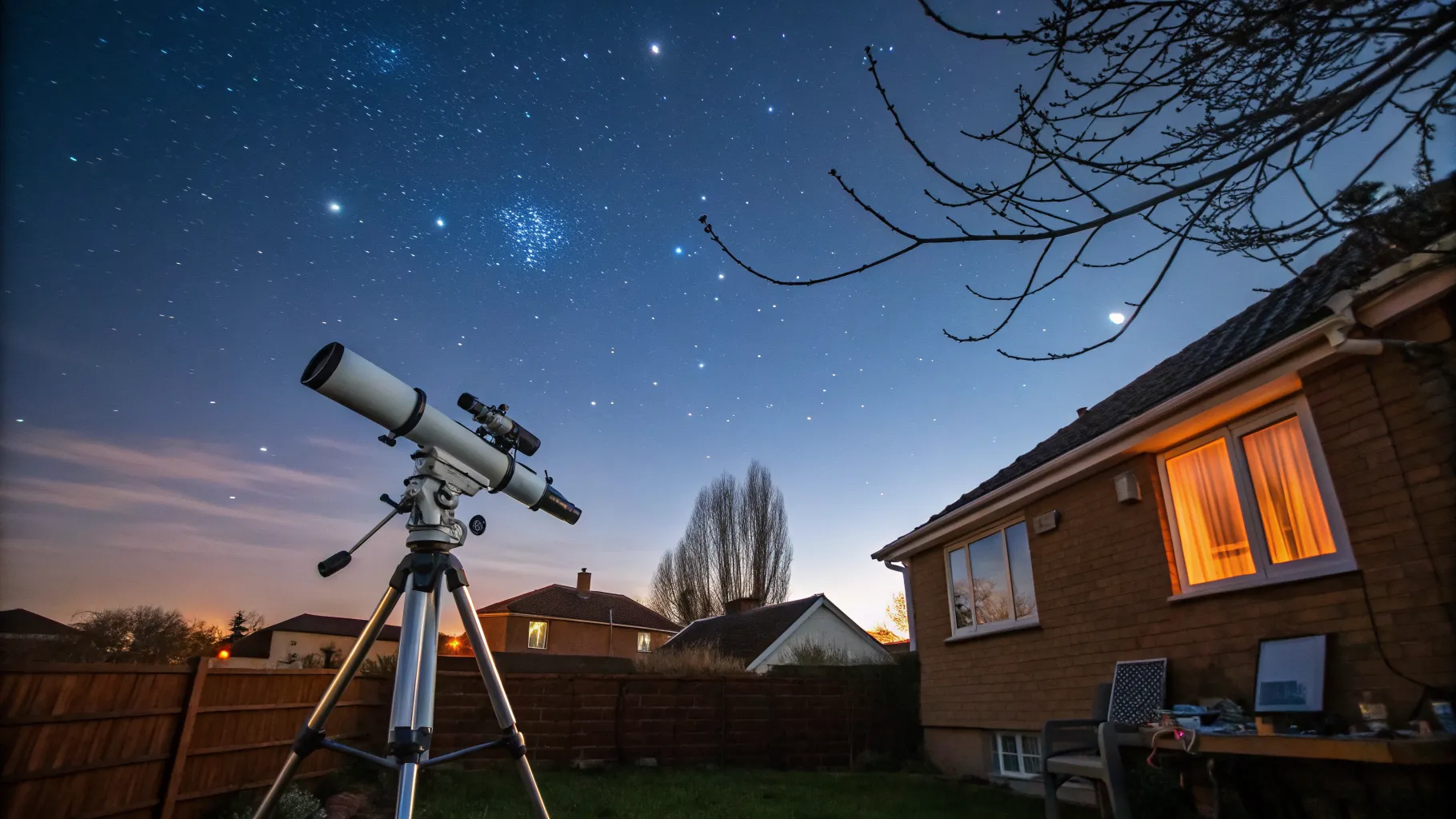
The closing days of June brought a major space-telescope milestone, the end of Amazon’s first summer Prime Day, a fresh smart-telescope arrival in the UK, and a couple of pre-dawn targets worth setting an alarm for. Here is what matters if you are buying kit or planning observing sessions over the next fortnight.
NASA’s Roman Space Telescope arrives in Florida
NASA’s Nancy Grace Roman Space Telescope reached Kennedy Space Center in Florida on 21 June, beginning its final stretch of pre-launch work, according to the NASA Roman blog. The roughly 18,000-pound spacecraft travelled by barge from Maryland, and technicians will now clean it, test its solar panels and load about 290 gallons of hydrazine fuel ahead of a launch targeted for no earlier than 30 August on a SpaceX Falcon Heavy. Roman carries a Hubble-sized 2.4-metre mirror but images a patch of sky 100 times larger per exposure, so once it starts surveying expect a steady stream of wide-field imagery, and renewed public interest in astronomy, from the autumn.
Prime Day telescope deals wind down
Amazon’s first June Prime Day ran from 23 June, and the better skywatching discounts are now winding up, with Space.com tracking the standouts. The recurring headline was the Celestron NexStar go-to range, with the 8SE seeing one of its larger cuts of the year and smaller reductions across the 4SE and 6SE, alongside discounts on entry-level scopes like the Sky-Watcher Heritage 130P. Most of the prices quoted in that coverage are US dollar figures, so check the UK listing before you commit; if you missed the event, our guide to the best telescopes under £200 is a good shortlist to watch for the next sale.
ZWO Seestar S30 Pro lands in the UK
ZWO’s Seestar S30 Pro, the upgraded version of its pocketable smart telescope, is now on sale in the UK from around £599 to £649, and the first hands-on reviews have arrived, including a positive write-up from Digital Camera World. It swaps in a larger Sony IMX585 main sensor for 4K capture, adds an apochromatic quadruplet lens and a 48-megapixel wide-field camera for Milky Way shots, and bumps internal storage to 256GB, all in a 1.65kg body that fits in a camera bag. Planetary performance is still its weak spot, but for portable deep-sky imaging it is a clear step up; see how the wider category compares in our smart telescope comparison.
Mars meets the Pleiades before dawn
Around 28 June, orange Mars drifts close to the blue-white Pleiades star cluster low in the pre-dawn eastern sky, as flagged in Space.com’s June night-sky guide. It is an early start, but the colour contrast between the rusty planet and the cool cluster is striking through binoculars or a small scope, and the Pleiades are an easy naked-eye target once you know where to look. If you are still choosing kit, bright pairings like this reward a modest scope or even good binoculars; our beginner’s buying guide explains what magnification you actually need.
The Moon brushes past Antares
On 27 June, an almost-full Moon sits just half a degree north of Antares, the fiery red heart of Scorpius, per the Royal Observatory Greenwich’s June highlights. Scorpius skims low across the southern horizon from the UK, so you will need a clear, unobstructed view south, but the bright Moon makes the pairing easy to find. With astronomical darkness still scarce this close to the solstice, low-altitude Moon and planet events like this are among the most rewarding things to observe right now.
Clear skies forecast? Get a nudge.
Our weekly email flags the next good UK observing window and one easy target to find.
Join the listMore from Starvest
Keep reading
Best Telescopes for Beginners in the UK (Tested by Price Bracket)
The best beginner telescopes in the UK by budget, from sub-£150 tabletop scopes to app-guided and smart telescopes, with real 2026 prices.
What Can You See with Binoculars at Night? A Realistic Astronomy List
A realistic list of what you can see with binoculars in astronomy, from the Moon and Jupiter's moons to Andromeda, with tips for spotting each from the UK.
How to Set Up and Use Your First Telescope (Step by Step)
How to use a telescope as a beginner: assemble the mount, align the finder, focus, and find your first targets. A clear step-by-step UK guide.