Stargazing Near London: Where to Escape the Light Pollution
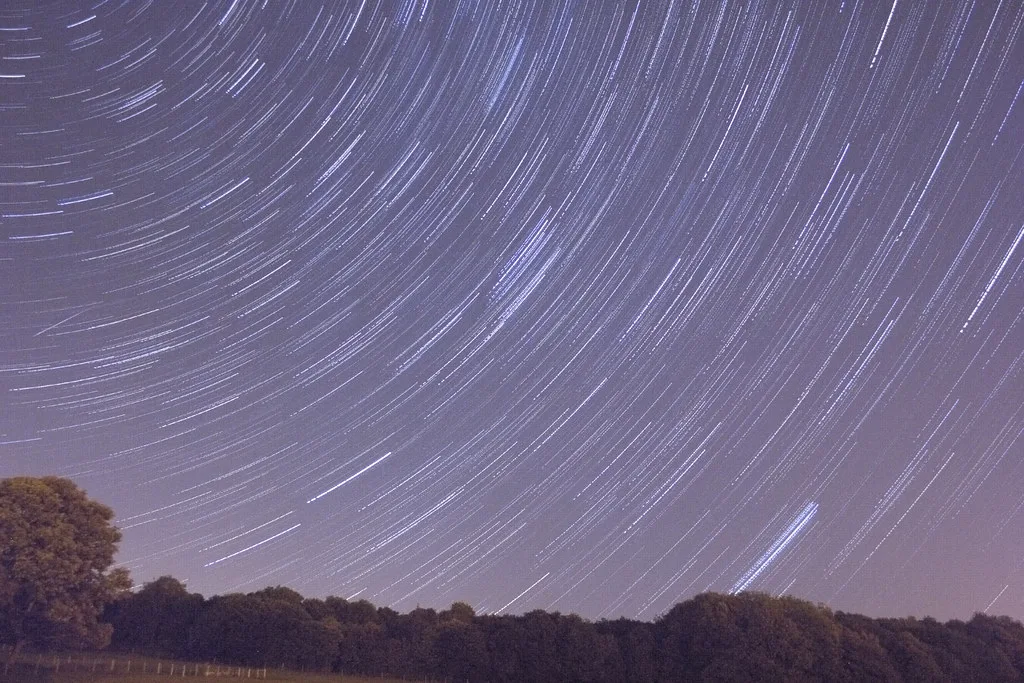
Stargazing near London runs into one problem that no amount of kit solves: the capital throws a light dome into the sky that does not stop at the M25. It fades with distance rather than ending at a line, so the real question is not “how far out do I have to go” but “what is between me and the city”. A twenty mile drive that puts a chalk ridge between you and London beats a forty mile drive across open flat ground every time, because the ridge blocks the glow at the horizon where it does the most damage.
That is the organising idea for this page. Three tiers, by how far you are willing to travel, with the honest limit of each: what you can genuinely see in London, what the North Downs give you and why most of their car parks are useless after dark, and the ten accredited South Downs sites that are the nearest properly dark ground to the capital.
Tier 1: stargazing inside London
You will not see the Milky Way from a London park. What you will see is more than most people expect, because the objects that survive a bright sky are the ones worth looking at anyway: the Moon in detail, Jupiter’s belts and its four Galilean moons, Saturn’s rings, Venus through its phases, Mars at opposition, and the brighter double stars. Orion’s Nebula is visible from central London in a modest telescope. The Andromeda Galaxy is not, in any practical sense.
Three places make this easy and cost nothing:
Hampstead Observatory, Lower Terrace, sits on top of a Victorian covered reservoir near Whitestone Pond, one of the highest points in London. The Hampstead Scientific Society opens it to the public through the autumn and winter, generally Friday and Saturday evenings, and entry is free but ticketed through Eventbrite. The instruments are a 6-inch Cooke refractor, a Victorian research telescope, and a 16-inch Dobsonian reflector. The catch is weather: tickets only go live once volunteers have confirmed the sky will be clear, which can be the same day. Check the society’s observatory page before you plan an evening around it.
The Baker Street Irregular Astronomers run free public stargazing at the Hub in Regent’s Park. There is no membership fee and no application. Bring binoculars or a small telescope if you have one, or look through somebody else’s if you do not. It is the fastest way to work out whether you actually enjoy this before you spend money on kit.
Richmond Park is the best large dark-ish space in London for going alone, and it has a scheduling trap worth knowing. Vehicle gates close at dusk all year, so you are walking in. Pedestrian gates are open twenty four hours, except during the six week deer culls from November to early December and February to early March, when they are shut between 8pm and 7:30am on all nights except Friday and Saturday. Those are two of the best stargazing months of the year, so check The Royal Parks’ own FAQ before driving over.
If you are working from a London garden or balcony, our guide to naked-eye stargazing for beginners covers what is realistically reachable without a telescope.
Tier 2: the North Downs, 45 to 75 minutes
The North Downs are the obvious escape from south London, and they half work. Get onto the southern slope, with the ridge between you and the city, and the sky is noticeably better than anything inside the M25. Headley Heath, Ranmore Common and the lanes above Dorking all give useable sky to the south.
The problem is access. Most of the good high ground here is National Trust land, and the Trust runs it dawn to dusk. Box Hill’s countryside opening times are exactly that, dawn until dusk, and overnight parking is not allowed. In winter that is workable, because dusk falls before five and full darkness follows around ninety minutes later, but you are then parked somewhere you are not supposed to be. In summer it rules the site out entirely.
The practical answer on the North Downs is to find a legal lay-by or a village hall car park with public parking rather than a countryside car park, and to accept that the northern half of your sky is written off. It is a good option for a two hour session on a clear weeknight. It is not where you take an evening off work to see the Milky Way.
Tier 3: the South Downs, the nearest genuinely dark sky
The South Downs National Park is an International Dark Sky Reserve, and the Authority is marking its tenth anniversary of that status in 2026. The whole park sits within about sixty five miles of London, and the eastern end is reachable in roughly ninety minutes from south London on a clear evening.
Ten locations across the park are accredited Dark Sky Discovery Sites, which means they have been nominated locally, assessed for light pollution, and confirmed to have public access and open sightlines. The park authority’s Dark Sky Discovery Sites page lists them all. Here they are with what each one actually gives you, ordered roughly by how easy they are from London:
- Ditchling Beacon, East Sussex. The highest point in East Sussex, with 360 degree views. The nearest of the ten to London and the one most Londoners should try first.
- Devil’s Dyke, near Brighton, BN1 8YJ. Panoramic and easy to find, but Brighton’s glow sits on your southern horizon, which is the opposite of what you want.
- Bignor Hill, on the Slindon Estate. The Milky Way is visible here on clear nights.
- Harting Down, east of Petersfield. The park authority singles it out for astro-landscape photography, with good views overhead and to the north from the car park.
- Iping Common, near Midhurst. Open access land continuing onto Stedham and Barlavington commons, so you can walk away from the parking.
- Butser Hill, in Queen Elizabeth Country Park. The highest observing point in Hampshire, with 360 degree views.
- Old Winchester Hill National Nature Reserve, near Corhampton. You can see the Milky Way here with the glow from Southampton sitting on the horizon, which is a fair description of most southern English dark sites.
- Buriton, the village recreation ground near Petersfield. Widespread unobstructed views overhead, and the easiest of the ten if you dislike walking in the dark.
- Birling Gap, near the Seven Sisters. Coastal, so you get big open sky over the Channel, which is as dark as any horizon in southern England.
- Winchester Science Centre and Planetarium. Wide views to the east, and the only one of the ten with a building, a roof and staff.
Parking at these sites is real but often basic. The park authority specifically asks people not to park on verges when a car park is full, which matters more at night when a badly parked car is a hazard rather than an inconvenience.
For how the accreditation tiers work, and where the South Downs sits against the rest of the country, see our guide to UK dark sky sites and the wider stargazing in England roundup.
Which way to face
This is the single most useful habit for anyone observing near a city, and almost nobody mentions it. Work out where London is from where you are standing, and plan the night around the opposite half of the sky.
From the South Downs, London is north or north east. That means the southern sky, over the Channel, is your good half, and it is also where the ecliptic runs, so the Moon and planets are there anyway. From the North Downs, London is due north and the southern sky is again the one to use. Point a telescope at anything low in the north from either range and you are looking through the brightest part of the dome.
Altitude helps for the same reason. An object 60 degrees up is being viewed through far less atmosphere, and far less city glow, than one sitting 15 degrees above the horizon.
Getting the rest of it right
Distance from London is only one of four variables, and it is the one people over-weight.
Moon phase matters more than location for anything faint. A full Moon washes out a dark sky reserve more thoroughly than London’s dome washes out Richmond Park. Plan around new Moon, or around the week when the Moon sets early. Our moon phase calculator gives the dates.
Dark adaptation takes twenty to thirty minutes and one glance at a phone screen destroys it. Set your phone to its dimmest setting with a red filter before you leave the car, or use a proper red torch.
Kit should be the last thing you worry about. Binoculars are the right first instrument for a site like Ditchling Beacon, because a wide field is what suits the Milky Way, star fields and large open clusters. Astronomy binoculars will show you more on your first three trips than a cheap telescope will, and they survive being carried up a hill in the dark.
Tell someone where you are. Rural chalk downland at midnight in January is not dangerous, but it is cold, exposed, and out of mobile coverage in places.
Frequently asked questions
How far from London do you have to go for stargazing? About an hour and a half to reach genuinely dark sky, which in practice means the eastern South Downs. Forty five minutes into the North Downs gets you a clear improvement on the southern half of the sky but leaves the north washed out. Inside the M25 you are limited to the Moon, the planets and bright doubles.
Where is the nearest Dark Sky Reserve to London? The South Downs National Park, an International Dark Sky Reserve since 2016. The whole park lies within roughly sixty five miles of the capital, and Ditchling Beacon is the closest of its ten accredited Dark Sky Discovery Sites.
Can you see the Milky Way near London? Not from inside it, and not from the North Downs. From the darker South Downs sites, including Bignor Hill and Old Winchester Hill, it is visible on a clear moonless night, though the southern English version is a faint band rather than the structured river you get in mid Wales or Galloway.
Is there free stargazing in London? Yes. Hampstead Observatory opens free to the public through autumn and winter with a ticket booked on Eventbrite, and the Baker Street Irregular Astronomers run free sessions at the Hub in Regent’s Park with no membership fee.
Are the National Trust car parks on the North Downs open at night? Generally not. Box Hill’s countryside opening times run dawn to dusk and overnight parking is not allowed, and neighbouring Trust sites are managed the same way. Look for a public lay-by or village car park instead.
Is Richmond Park open at night for stargazing? Pedestrian gates are open twenty four hours for most of the year, but the vehicle gates close at dusk, so you walk in. During the deer culls from November to early December and February to early March, pedestrian gates close from 8pm to 7:30am except on Friday and Saturday nights.
What is the best month for stargazing near London? Late October through February. Darkness arrives early enough to observe at a sociable hour, the air is usually more transparent than in summer, and the winter constellations, Orion, Taurus and Auriga, are the richest part of the sky. Balance that against the Richmond Park cull closures in November and February.
Clear skies forecast? Get a nudge.
Our weekly email flags the next good UK observing window and one easy target to find.
Join the listMore from Starvest
Keep reading
Best Telescopes for Beginners in the UK (Tested by Price Bracket)
The best beginner telescopes in the UK by budget, from sub-£150 tabletop scopes to app-guided and smart telescopes, with real 2026 prices.
What Can You See with Binoculars at Night? A Realistic Astronomy List
A realistic list of what you can see with binoculars in astronomy, from the Moon and Jupiter's moons to Andromeda, with tips for spotting each from the UK.
How to Set Up and Use Your First Telescope (Step by Step)
How to use a telescope as a beginner: assemble the mount, align the finder, focus, and find your first targets. A clear step-by-step UK guide.