Telescope Magnification Calculator: Work Out Your Real Power
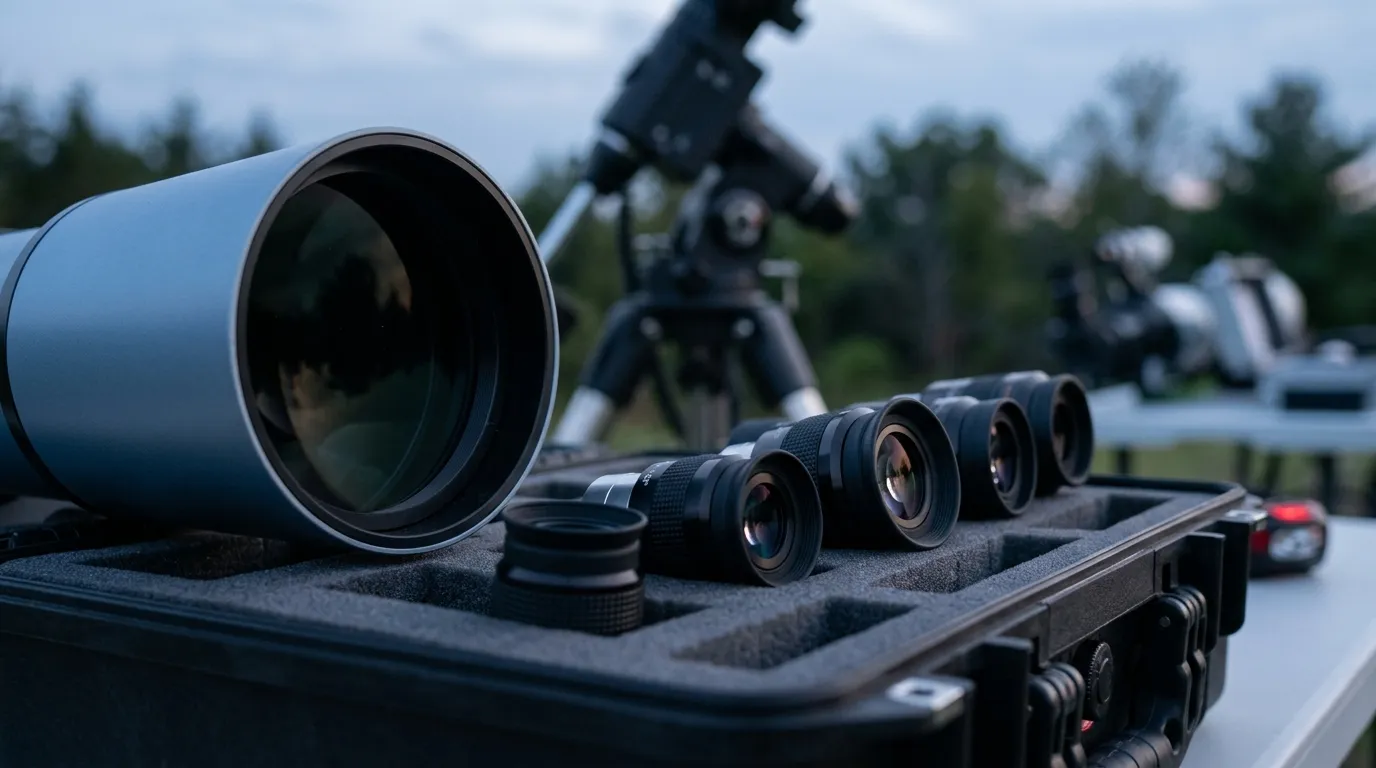
Magnification is not a property of the telescope, it is decided by the eyepiece you put in it. Enter your telescope's focal length and the eyepiece, and this tells you the real magnification, whether it is sensible for your aperture, and the exit pupil. The trap to avoid: pushing past roughly twice your aperture in millimetres just gives you a bigger, dimmer, blurrier image.
Your telescope
Your eyepieces
Two limits bracket the useful range. The maximum useful magnification is about twice the aperture in millimetres (a 130mm scope tops out near 260x); beyond that the image gets larger but no more detailed, just dimmer and softer. The minimum useful magnification is where the exit pupil grows past about 7mm, the widest a dark-adapted eye opens, so light spills around your pupil and is wasted. Most of your best views sit between those two, often around 25x to 150x.
Clear skies forecast? Get a nudge.
Our weekly email flags the next good UK observing window and one easy target to find.
Join the listMore from Starvest
Keep reading
Best Telescopes for Beginners in the UK (Tested by Price Bracket)
The best beginner telescopes in the UK by budget, from sub-£150 tabletop scopes to app-guided and smart telescopes, with real 2026 prices.

What Can You See with Binoculars at Night? A Realistic Astronomy List
A realistic list of what you can see with binoculars in astronomy, from the Moon and Jupiter's moons to Andromeda, with tips for spotting each from the UK.
How to Set Up and Use Your First Telescope (Step by Step)
How to use a telescope as a beginner: assemble the mount, align the finder, focus, and find your first targets. A clear step-by-step UK guide.