Telescope and Stargazing News: June 2026
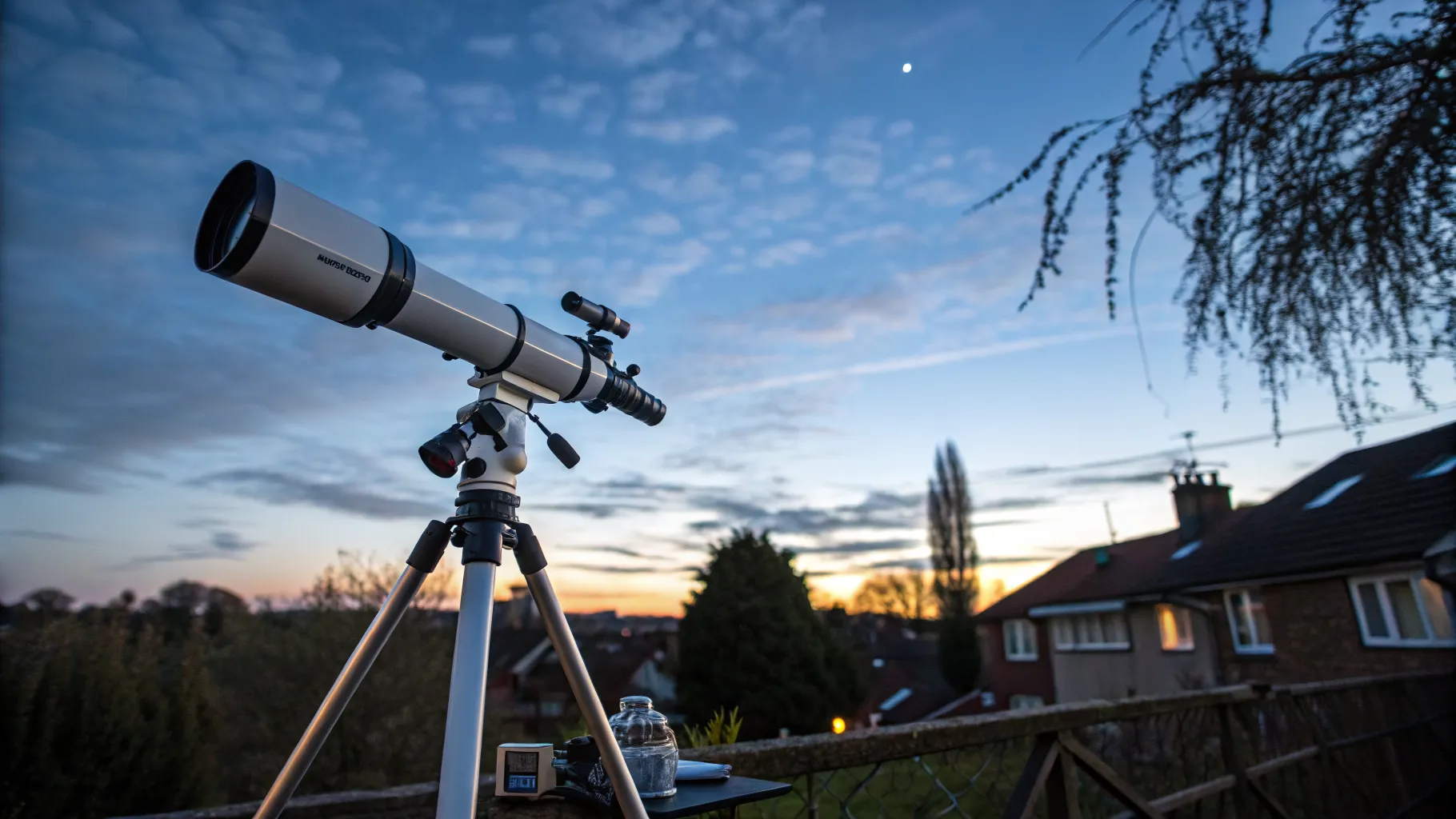
The second half of June has brought fresh reviews of the year’s most portable smart telescope, the first wave of Prime Day price cuts, and a couple of summer-sky targets worth getting outside for. Here is what matters if you are buying kit or planning observing sessions in the UK over the next fortnight.
Dwarf Mini reviews land for the “world’s smallest smart telescope”
In-depth reviews of DwarfLab’s Dwarf Mini have now arrived, including a hands-on test from Digital Camera World, which calls it a near-perfect portable package for photographing the stars. At roughly 840g with a Sony IMX662 sensor, a dual-lens system, three built-in filters and EQ-mode 90-second exposures, it packs genuine deep-sky astrophotography into something that fits in a daypack, for £359. If portability is your priority it is one of the most interesting entry points this year; see how it stacks up against the obvious rivals in our smart telescope comparison.
Early Prime Day telescope deals are already live
Ahead of the 23 to 26 June Prime Day event, early discounts on skywatching gear are already active, with Space.com tracking the better ones. The headline so far is a chunky cut on the Celestron NexStar 8SE, an 8-inch go-to scope that has dropped to one of its lowest prices of the year, plus smaller reductions across the NexStar beginner range. Smart scopes and eyepieces usually see real movement during the event too, so if you are shopping at the entry level our guide to the best telescopes under £200 is a good shortlist to watch for drops.
Noctilucent cloud season has opened over the UK
The 2026 noctilucent cloud season is now under way, and BBC Sky at Night Magazine has refreshed its guide to spotting these rare electric-blue wisps that glow on the edge of space. They are best hunted around 90 to 120 minutes after sunset, low on the north-northwest horizon, and the UK sits in the ideal latitude band to catch them through June and July. No telescope is needed: a clear flat northern horizon and a phone camera are enough, which makes this one of the easiest summer targets for anyone new to the hobby.
A four-object line-up at dusk on 16 June
The Royal Observatory Greenwich’s June sky guide flagged Venus, Jupiter, Mercury and a thin crescent Moon strung out together low in the west at dusk around 16 June, a compact and photogenic gathering after sunset. Bright planets and the Moon are an ideal first target if you are deciding what to buy, since they reward a modest scope or even good binoculars; our beginner’s buying guide explains what magnification you actually need.
Summer solstice marks the shortest nights
The summer solstice falls on 21 June, the longest day and the shortest observing nights of the year, per the Royal Observatory’s June highlights. Astronomical darkness is in short supply across much of the UK this month, so it is a good time to focus on bright planets, the Moon and noctilucent clouds rather than faint deep-sky objects, and to start planning ahead for the darker, longer nights returning from late July.
Clear skies forecast? Get a nudge.
Our weekly email flags the next good UK observing window and one easy target to find.
Join the listMore from Starvest
Keep reading
Best Telescopes for Beginners in the UK (Tested by Price Bracket)
The best beginner telescopes in the UK by budget, from sub-£150 tabletop scopes to app-guided and smart telescopes, with real 2026 prices.
What Can You See with Binoculars at Night? A Realistic Astronomy List
A realistic list of what you can see with binoculars in astronomy, from the Moon and Jupiter's moons to Andromeda, with tips for spotting each from the UK.
How to Set Up and Use Your First Telescope (Step by Step)
How to use a telescope as a beginner: assemble the mount, align the finder, focus, and find your first targets. A clear step-by-step UK guide.