NASA's Swift Burned Up on 4 November; Hubble Help Sought
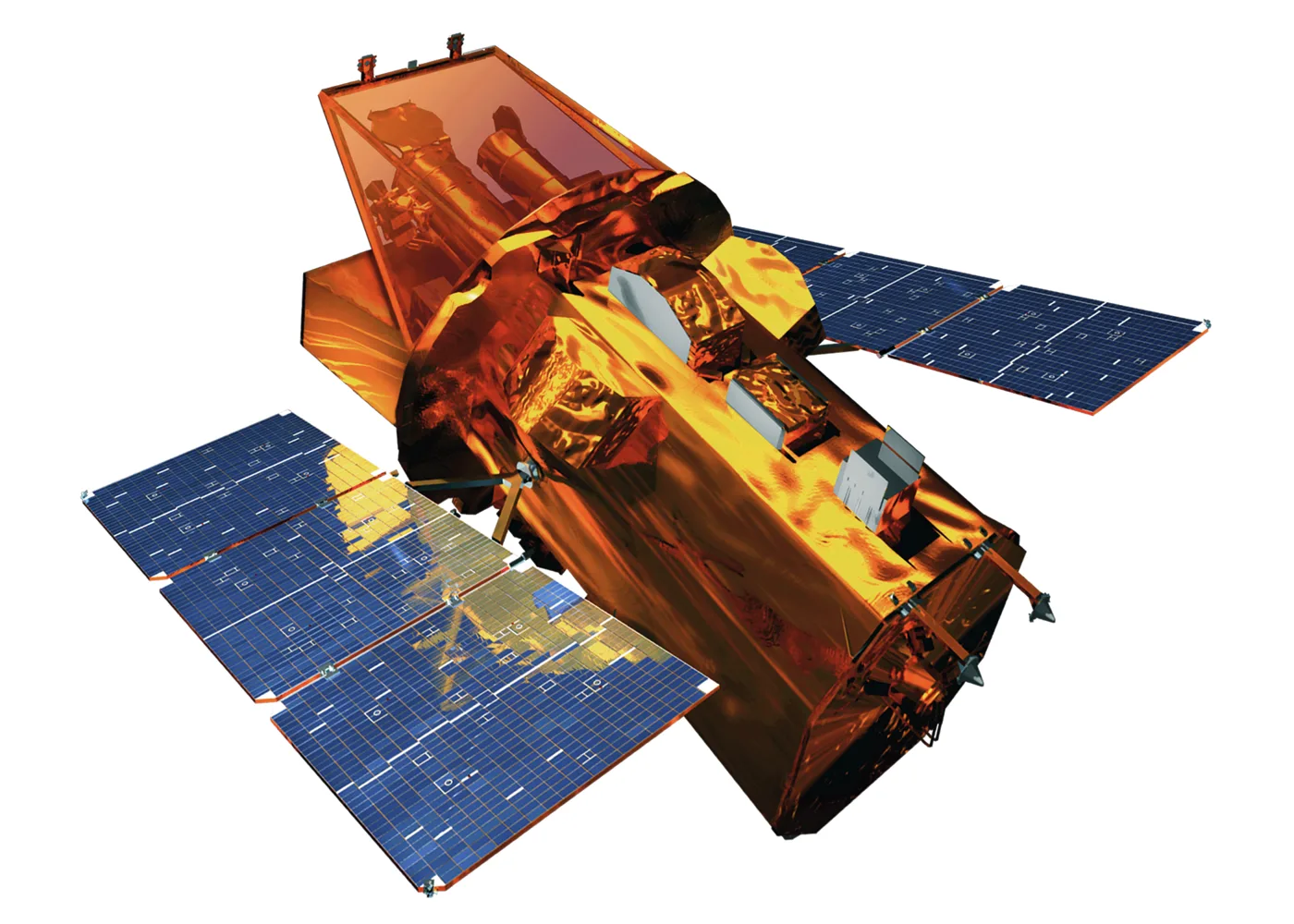
Four stories this week, from 4 November back to Halloween. NASA’s Swift observatory fell out of orbit on Wednesday, almost 22 years after launch, and NASA has asked companies how they might keep Hubble from going the same way. Closer to home, the northern lights reached Scotland, Cumbria and Wales on Halloween night, the South Downs has opened its astrophotography competition with £150 prizes, and a European orbiter has found signs that Mars still has hot magma under its volcanoes.
Swift re-entered over Sumatra on 4 November; NASA asks industry to help Hubble
NASA’s Neil Gehrels Swift Observatory re-entered Earth’s atmosphere on Wednesday 4 November, almost 22 years after its 2004 launch. The US Space Force confirmed the time as 7:39am Eastern, which was 12:39 GMT, over the North Sumatra region of Indonesia. NASA expected most of it to burn up, but said some parts may have survived.
Swift was built for a two-year mission to catch gamma-ray bursts, the most powerful explosions in the universe, and to swing its telescopes onto them within minutes. It ran for more than two decades and sending alerts that sent other observatories to supernovae, flaring stars and comets. Its end came from drag: solar activity puffed up the upper atmosphere and Swift began to sink. A fast-turnaround servicing mission to boost it ended in August without an attempt, and on 20 October, at 275km, the spacecraft could no longer cope and the team at Penn State switched it off.
Hubble faces the same problem on a longer clock. On 29 October NASA asked companies for ideas on boosting Hubble to a higher orbit, servicing it, or bringing it down safely at the end of its life. Hubble has no engine of its own, NASA expects it to re-enter in 2033 or 2034, and any mission would need to fly by 2032. Responses are due by 30 November. Sources: NASA, Swift observatory re-entered atmosphere, NASA, Swift mission ends ahead of re-entry and NASA, commercial servicing for Hubble.
The northern lights reached Scotland, Cumbria and Wales on Halloween night
The aurora put on a strong show on the night of Saturday 31 October, once the cloud and rain on a weather front cleared south, BBC Weather reported the next morning. Its Weather Watchers sent in bright green displays from Nairn in the Highlands, Busta in Shetland and Jedburgh in the Scottish Borders, a reflection off the water at Pooley Bridge in Cumbria, and colour over Dolgellau in Gwynedd. Northern Ireland was also well placed. The aurora carried on into Sunday night, mostly in the north, but was weaker.
If you missed it, the sun is past its peak but still active, so more nights like this are possible through the winter. Our guide to how to see the northern lights from the UK explains the alert levels to watch, and why a camera can catch an aurora further south than your eyes can. Source: BBC Weather, Northern Lights dance across UK sky on Halloween night.
South Downs astrophotography competition: £150 prizes, entries close 11 January
The South Downs National Park Authority launched its seventh astrophotography competition on 2 November. There are five categories, each with a £150 winner and a £75 runner-up: South Downs Dark Skyscapes (landscapes under the stars, aurora welcome), Magnificent Moon (solar eclipse shots count), South Downs Life at Night, From the South Downs to Deep Space for telescope images of galaxies, nebulae and planets, and a mobile phone category. Every photo must be taken inside the national park, which is an International Dark Sky Reserve.
You can send up to eight images, as JPEGs between 1MB and 10MB, each in its own email with an entry form. The competition page says entries close at midnight on Monday 11 January 2027; the launch release prints the year as 2026, which is a slip. The winners will be shown at the park’s Dark Skies Festival, 11 to 21 February 2027, which this year takes the Moon as its theme. Our dark sky sites in the UK covers where to go, and how to photograph the Moon with a phone through a telescope is a good start for the Moon category. Sources: South Downs National Park Authority, launch release and competition rules and entry form.
Gas over Alba Mons suggests Mars’s volcanoes are sleeping, not dead
ESA said on 5 November that its ExoMars Trace Gas Orbiter has found the strongest hint yet that Mars still has hot magma underground. Hydrogen chloride in the Martian air normally peaks in northern winter and mostly vanishes in summer, but the orbiter’s spectrometers kept finding a spike in early northern summer, always in the same place: above fissures on the flanks of the Alba Mons volcano. Its CaSSIS camera then picked out fresh, narrow cracks there, some hundreds of metres long. On Earth the same gas escapes from magmatic vents. The team, led by Alexander Trokhimovskiy, published the work in Science Advances on 4 November.
Nobody has ever seen a new lava flow on Mars, so this is gas, not an eruption, and nothing a backyard telescope will show. But Mars is climbing the morning sky ahead of its opposition on 19 February 2027, and our guide to Mars at opposition in 2027 explains what you will see of its surface. Source: ESA, European orbiter detects hints of volcanic activity on Mars.
Clear skies forecast? Get a nudge.
Our weekly email flags the next good UK observing window and one easy target to find.
Join the listMore from Starvest
Keep reading
Best Telescopes for Beginners in the UK (Tested by Price Bracket)
The best beginner telescopes in the UK by budget, from sub-£150 tabletop scopes to app-guided and smart telescopes, with real 2026 prices.
What Can You See with Binoculars at Night? A Realistic Astronomy List
A realistic list of what you can see with binoculars in astronomy, from the Moon and Jupiter's moons to Andromeda, with tips for spotting each from the UK.
How to Set Up and Use Your First Telescope (Step by Step)
How to use a telescope as a beginner: assemble the mount, align the finder, focus, and find your first targets. A clear step-by-step UK guide.