Seestar S30 Plus Launches at $499; S30 and S50 Dropped
Four stories this week, from 1 to 12 November. ZWO has a new cheapest Seestar, Celestron has taught the Origin to shoot mosaics of the biggest showpieces, and the Royal Astronomical Society has opened a free photo competition with £500 category prizes. Closer to home, a Cambridgeshire council has written to the government asking it to save the Cambridge Telescope, part of the e-MERLIN network that loses its operating money after March 2028.
ZWO launches the Seestar S30 Plus at $499; the original S30 and S50 are gone
ZWO put the Seestar S30 Plus on sale on 10 November at $499 or €499, which makes it the cheapest Seestar in the range and $200 less than the S30 Pro. ZWO’s own store was showing an introductory $474 when we checked on 12 November. We have not yet seen a confirmed UK price.
It replaces the original S30, which Digital Camera World and Astronomy magazine both report has been discontinued; Digital Camera World says the original S50 has gone too. The S30 Plus is close to an S30 Pro with cheaper sensors. It keeps the Pro’s 30mm four-element apochromatic lens with ED glass, and has two cameras, a telephoto with about a 3 degree field for galaxies and nebulae and a wide-angle with about 43.5 degrees for the Milky Way, constellations and star trails. Both shoot 1440 x 2560 pixels (about 3.7 megapixels), up from the old S30’s 1920 x 1080 but short of the Pro’s 4K. It weighs 1.65kg and comes with a tabletop tripod and a magnetic solar filter.
For a buyer, the point is that the old S30 deals are drying up and this is now the entry Seestar. If you own an S30, the gains are sharper optics and more pixels, not a different kind of telescope. Our Seestar S30 review explains what a 30mm smart scope will and will not show, and best smart telescope UK sets it against the rivals. Sources: Digital Camera World, 10 November and Astronomy, ZWO introduces the Seestar S30 Plus.
Celestron Origin gets a free Mosaic Mode for targets too big for one frame
The Celestron Origin Mark II, with its 6-inch f/2.2 RASA optics, sees a field of 1.32 by 0.75 degrees. That fits most galaxies and nebulae, but not the ones beginners want first: the Andromeda Galaxy is about 3 degrees end to end and the North America Nebula about 2. A free update now adds Mosaic Mode, Astronomy magazine reported on 9 November. You draw a box round the target in the Origin app, and the telescope splits it into overlapping tiles, slews to each one, captures them and stitches the result into one wide image.
Expect a mosaic to be an overnight job; large targets can take hours, so you can tell the Origin to switch itself off when it has finished. Celestron’s release notes say a recent firmware update also cut visible seams between tiles and kept more faint nebulosity. The Origin has gained dithering as well, which nudges the scope between exposures so hot pixels can be thrown out when the frames are stacked. If you are weighing it against a Seestar, our Seestar S50 vs Celestron Origin comparison covers the price gap, and how to see the Andromeda Galaxy covers the obvious first mosaic. Source: Astronomy, Celestron Origin’s Mosaic Mode.
RAStroPhoto: free entry, £500 category prizes, closes 15 January 2027
The Royal Astronomical Society opened RAStroPhoto on 1 November, a free worldwide photo competition marking 200 years of its journal, Monthly Notices of the Royal Astronomical Society, which was first published in 1827. You can upload up to five photographs between 1 November 2026 and 15 January 2027. Each must have been taken in the last five years and must not have already won another competition, and AI-generated images are banned. Professional kit is not needed.
The categories include Our Solar System (the Sun, Moon, planets, comets), Deep Sky (galaxies), Our Galaxy (nebulae, clusters), Earth and Space (landscapes, aurora, the Milky Way, meteors and star trails) and Observing Astronomers, for pictures of people and kit at work. Each category winner gets £500, and the overall winner gets £2,000 of equipment from the sponsor, First Light Optics. Winners will be announced in summer 2027. A Halloween aurora shot or a Leonid from next week’s peak would fit Earth and Space; our Leonids 2026 guide has the hours to watch on 18 November. Sources: Royal Astronomical Society, entries now open and the RAStroPhoto competition site.
Council asks ministers to save the Cambridge Telescope as e-MERLIN money ends in 2028
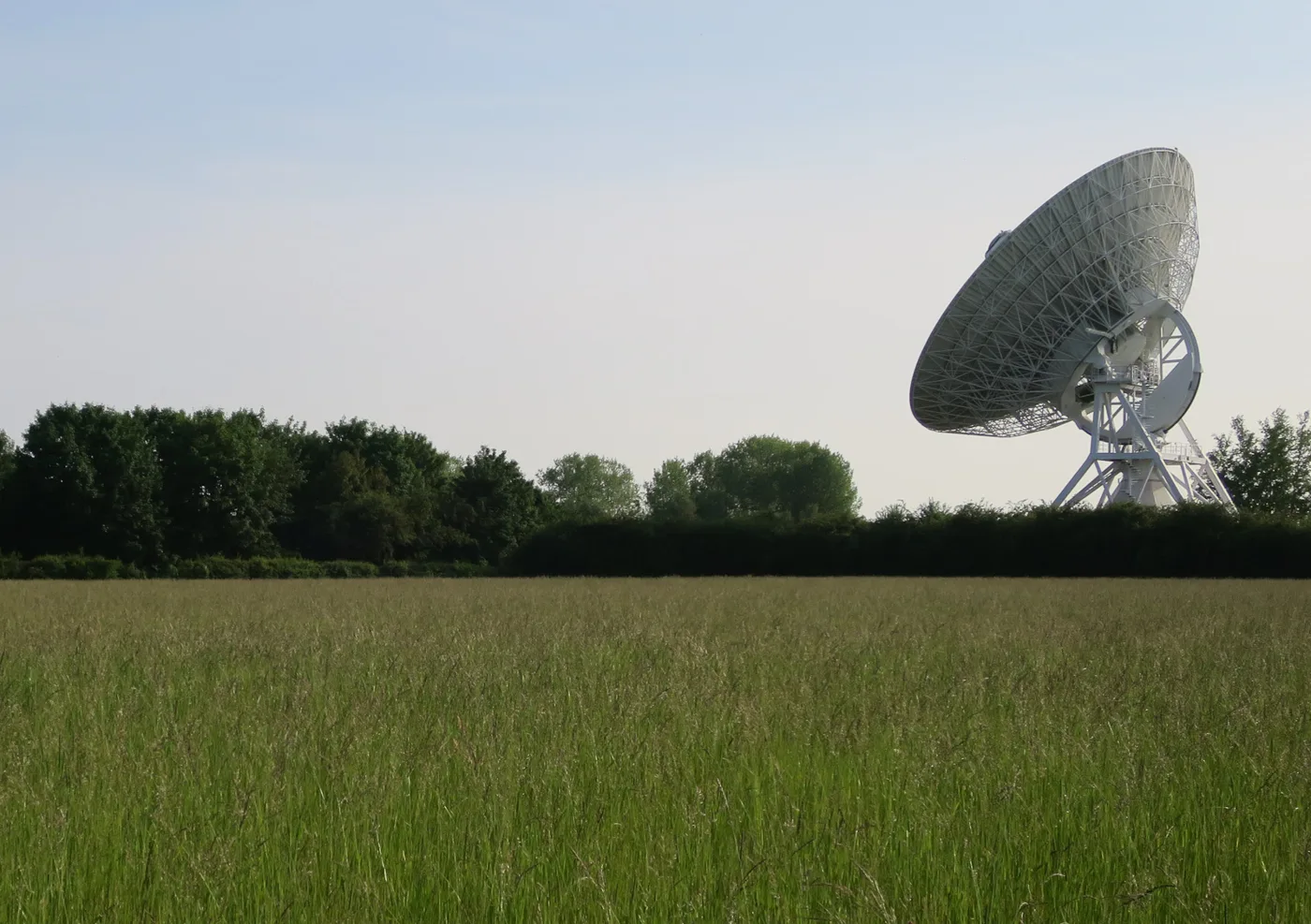
The Cambridge Telescope, at the Mullard Radio Astronomy Observatory at Lord’s Bridge, is one of the seven radio dishes in e-MERLIN, which work together as a single instrument across England with the Lovell Telescope at Jodrell Bank. The Science and Technology Facilities Council and UK Research and Innovation have proposed ending all of e-MERLIN’s operating funding after March 2028. In a letter dated 10 November, Cllr Bridget Smith, leader of South Cambridgeshire District Council, told the Secretary of State that ending the money without a replacement plan was an “existential threat” to e-MERLIN that could leave the Cambridge Telescope “defunct”. The local MP, Pippa Heylings, backed the call, and the council wants any final decision delayed until its effects have been assessed.
It does not change anything you can see from the garden, but it is the same funding decision behind the Jodrell Bank question we covered on 22 October, and it is the first time the Cambridge end of the network has been pulled into the row. Source: Ely Standard, 12 November.
Clear skies forecast? Get a nudge.
Our weekly email flags the next good UK observing window and one easy target to find.
Join the listMore from Starvest
Keep reading
Best Telescopes for Beginners in the UK (Tested by Price Bracket)
The best beginner telescopes in the UK by budget, from sub-£150 tabletop scopes to app-guided and smart telescopes, with real 2026 prices.
What Can You See with Binoculars at Night? A Realistic Astronomy List
A realistic list of what you can see with binoculars in astronomy, from the Moon and Jupiter's moons to Andromeda, with tips for spotting each from the UK.
How to Set Up and Use Your First Telescope (Step by Step)
How to use a telescope as a beginner: assemble the mount, align the finder, focus, and find your first targets. A clear step-by-step UK guide.