Night Sky December 2026 UK: Moon Covers the Pleiades 21 Dec
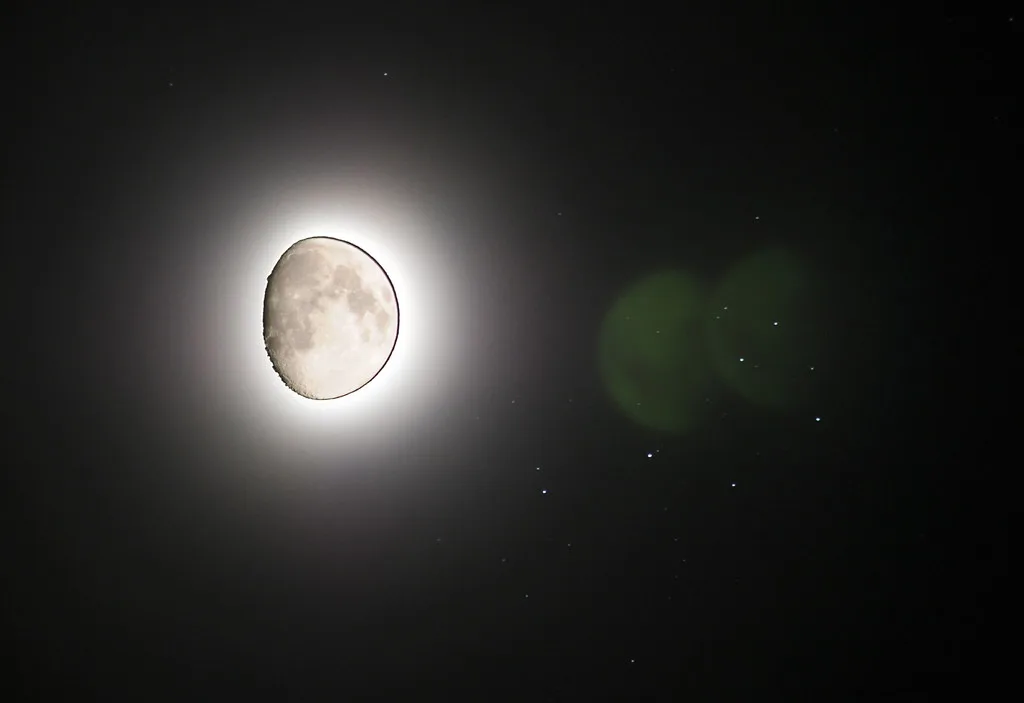
The night sky in December 2026 gives UK observers the longest dark nights of the year and three things worth setting an alarm for. The Geminids, the year’s best meteor shower, peak on the night of 13 to 14 December under a Moon that has already set. On solstice night, 21 December, the Moon slides across the Pleiades and hides some of its stars. And the full Moon at 1.28am on Christmas Eve is the closest supermoon of 2026.
The planets split between evening and morning. Saturn is the evening planet in the south after dark. Jupiter and Mars rise in the late evening in Leo, close to Regulus, and are highest before dawn, when brilliant Venus is already up in the south-east.
All times are GMT and, unless stated, are our own calculations for central England at 52.5 degrees north. London is a few minutes earlier for most events; Scotland gets even longer nights, with its planets a few degrees lower.
December 2026 at a glance
| Date | What to see | When and where |
|---|---|---|
| Tue 1 Dec | Last quarter Moon, 6.08am, in Leo with Mars, Jupiter and Regulus to its east | Before dawn, high in the south |
| Fri 4 Dec | Crescent Moon, about a fifth lit, roughly 6 degrees from Spica | About 6.30am, south-east |
| Sat 5 Dec | Thin crescent Moon about 7 degrees from Venus | About 7am, low in the south-east |
| Wed 9 Dec | New Moon, 12.51am | Darkest skies of the month either side |
| Sun 13 Dec | Earliest sunset of the year, about 3.47pm | South-west |
| Sun 13 to Mon 14 Dec | Geminids peak night, Moon sets about 8pm | 9pm to dawn, best around 2am |
| Tue 15 Dec | Jupiter stops moving east and begins its retrograde loop | All night from late evening |
| Thu 17 Dec | First quarter Moon, 5.42am. Evening Moon about 8 degrees from Saturn | Early evening, south |
| Mon 21 Dec | Winter solstice, 8.50pm. Moon passes over the Pleiades | About 10.15pm to midnight, high in the south |
| Tue 22 Dec | Ursids peak, about 10pm, under a 96% lit Moon | North, all night |
| Thu 24 Dec | Full Moon, the closest supermoon of 2026, 1.28am | High in the south in the small hours |
| Sun 27 Dec | Moon under 2 degrees from Regulus, Jupiter about 5 degrees away | Rising in the east, about 10pm |
| Wed 30 Dec | Last quarter Moon, 6.59pm. Latest sunrise of the year, about 8.22am | South-east |
The Moon’s separations are for the time shown, from central England. It moves about half a degree an hour against the stars, so a few hours either way changes the gap.
Solstice night: the Moon over the Pleiades
On Monday 21 December the winter solstice falls at 8.50pm GMT, the moment the Sun reaches its lowest point in the sky for the year. In central England the Sun is up for only about seven and a half hours that day, rising at 8.19am and setting at 3.49pm.
The same evening, a bright gibbous Moon, about 93% lit, drifts across the Pleiades. It is high in the south, roughly 60 degrees up, so there is no horizon to worry about. Which stars vanish depends on where you stand, because the Moon’s position shifts against the stars as you move north or south. For central England our calculation has the Moon covering Taygeta and Asterope and only just clipping Maia and Celaeno between about 10.15pm and 11.15pm; occultation listings computed for Greenwich, further south, include Electra, Maia and Alcyone.
The glare of a 93% Moon swamps the fainter stars, so use binoculars or a small telescope at low power and watch the dark edge of the Moon, the side facing the cluster. Stars there wink out in an instant, which is the whole point of watching an occultation. Check exact times for your town in a planetarium app such as Stellarium before you go out.
Planet by planet
Venus: the morning star, rising around 4am
Venus is unmissable before dawn, at magnitude minus 4.4. It rises a little before 4am all month and is about 20 degrees up in the south-south-east by 7am. It is heading for its greatest distance from the Sun in the morning sky, about 47 degrees, on 4 January 2027, so it stays this well placed into the new year. On 5 December a thin crescent Moon sits about 7 degrees below it.
Jupiter and Mars: Leo by late evening
Jupiter, at magnitude minus 2.1, rises at about 10pm on 1 December and just after 8pm by the 31st. It is highest in the south at about 5.20am at the start of the month and 3.20am by the end. Mars sits nearby in Leo, the two planets pulling apart after last month’s pairing: about 5 degrees on 1 December, 13 degrees by the 31st. Mars is brightening fast as Earth catches it up, from magnitude 0.5 to about minus 0.1, and its orange colour is easy to see next to the whiter Jupiter and blue-white Regulus.
Jupiter stops moving east against the stars on about 15 December and starts its retrograde loop, heading for opposition in early 2027. Any small telescope shows its four bright moons; our guide to seeing Jupiter’s moons explains how to tell which is which.
Saturn: the evening planet
Saturn, magnitude 0.7 to 0.8, is about 35 degrees up in the south as the sky darkens, on the border of Pisces and Cetus. It is due south at about 8pm on 1 December and 6pm by the 31st, and sets around 2am early in the month and around midnight by the end. Get to it early in the evening while it is highest. The rings are opening slowly again after being edge-on in 2025, so they still look thin; see how to see Saturn’s rings for what a small telescope shows.
Mercury: the first few mornings only
Mercury is in the dawn sky at the very start of December, magnitude minus 0.5, rising at about 6.15am, an hour and a half before the Sun. It is very low in the south-east and sinks into the twilight within a week or so. If you want it, try on 1 to 4 December, about 7am, with a flat south-eastern horizon and binoculars. It passes behind the Sun at the turn of the year.
Uranus and Neptune
Uranus, a month past opposition, is in Taurus not far from the Pleiades and highest at about 11.30pm early in the month. At magnitude 5.6 it is a binocular target from a dark site. Neptune, magnitude 7.8, is in Pisces near Saturn and needs a telescope and a finder chart.
The Moon in December 2026
| Phase | Date and time (GMT) |
|---|---|
| Last quarter | Tue 1 Dec, 6.08am |
| New Moon | Wed 9 Dec, 12.51am |
| First quarter | Thu 17 Dec, 5.42am |
| Full Moon (supermoon) | Thu 24 Dec, 1.28am |
| Last quarter | Wed 30 Dec, 6.59pm |
The Christmas Eve full Moon, the Cold Moon, is about 356,740 km away, the closest full Moon of 2026; perigee comes about eight hours later the same morning. The evening of Wednesday 23 December is the best night to look, with the Moon up from mid-afternoon and high in the south through the small hours. The first half of the month, from about 5 to 14 December, gives the darkest evenings for deep-sky targets such as the Orion Nebula.
Meteor showers
Geminids, peak night 13 to 14 December. The International Meteor Organization’s 2026 calendar puts the maximum in daylight on 14 December, so the night before is the one to watch. A crescent Moon, about a fifth lit, sets around 8pm, leaving the rest of the night dark. The radiant near Castor is highest at about 2am. Our Geminids 2026 page has the hour-by-hour plan.
Ursids, peak 22 December. A small shower, usually around 10 meteors an hour at best, with a radiant near the Little Dipper that stays up all night from the UK. The IMO gives the maximum as 22 December at 22h UT, two days before full Moon, and the 96% lit Moon means you will only catch the brightest. Our UK meteor shower calendar covers the year ahead.
The longest nights
December’s nights are the longest of the year. In central England, astronomical darkness, when the Sun is more than 18 degrees below the horizon, runs from about 6pm to about 6am all month: roughly 12 hours of full dark. The earliest sunset is around 13 December, at about 3.47pm, and the latest sunrise around 30 December, at about 8.22am, which is why the darkest evenings and the darkest mornings do not both fall on the solstice.
If you missed last month’s dawn planet line, see the night sky in November 2026.
Frequently asked questions
What can I see in the night sky in December 2026 in the UK? Saturn in the south in the evening; Jupiter and Mars in Leo from late evening; Venus brilliant before dawn. The Geminids peak on 13 to 14 December, the Moon passes over the Pleiades on 21 December, and the full Moon on 24 December is the year’s closest supermoon.
When is the best night for the Geminids in 2026? Sunday 13 into Monday 14 December. The Moon sets around 8pm, so the sky is dark from then until dawn. The radiant is highest at about 2am, which is the best hour.
Can you see the Moon cover the Pleiades from the UK in December 2026? Yes, on the evening of Monday 21 December, roughly 10.15pm to midnight, with the Moon high in the south. Which stars disappear depends on where you are in the country; check a planetarium app for your town.
What time is the winter solstice in 2026? 8.50pm GMT on Monday 21 December. In central England the Sun is above the horizon for about seven and a half hours that day.
When is the December 2026 full Moon? 1.28am GMT on Thursday 24 December. It is a supermoon, about 356,740 km away, and the closest full Moon of 2026. The evening of 23 December is the best time to look.
Which planets are visible before dawn in December 2026? Venus, low to the south-south-east and very bright; Jupiter and Mars, high in the south-west in Leo; and, in the first few days only, Mercury, very low in the south-east.
Clear skies forecast? Get a nudge.
Our weekly email flags the next good UK observing window and one easy target to find.
Join the listMore from Starvest
Keep reading
Best Telescopes for Beginners in the UK (Tested by Price Bracket)
The best beginner telescopes in the UK by budget, from sub-£150 tabletop scopes to app-guided and smart telescopes, with real 2026 prices.
What Can You See with Binoculars at Night? A Realistic Astronomy List
A realistic list of what you can see with binoculars in astronomy, from the Moon and Jupiter's moons to Andromeda, with tips for spotting each from the UK.
How to Set Up and Use Your First Telescope (Step by Step)
How to use a telescope as a beginner: assemble the mount, align the finder, focus, and find your first targets. A clear step-by-step UK guide.