Telescope vs Binoculars for Stargazing: What to Buy First
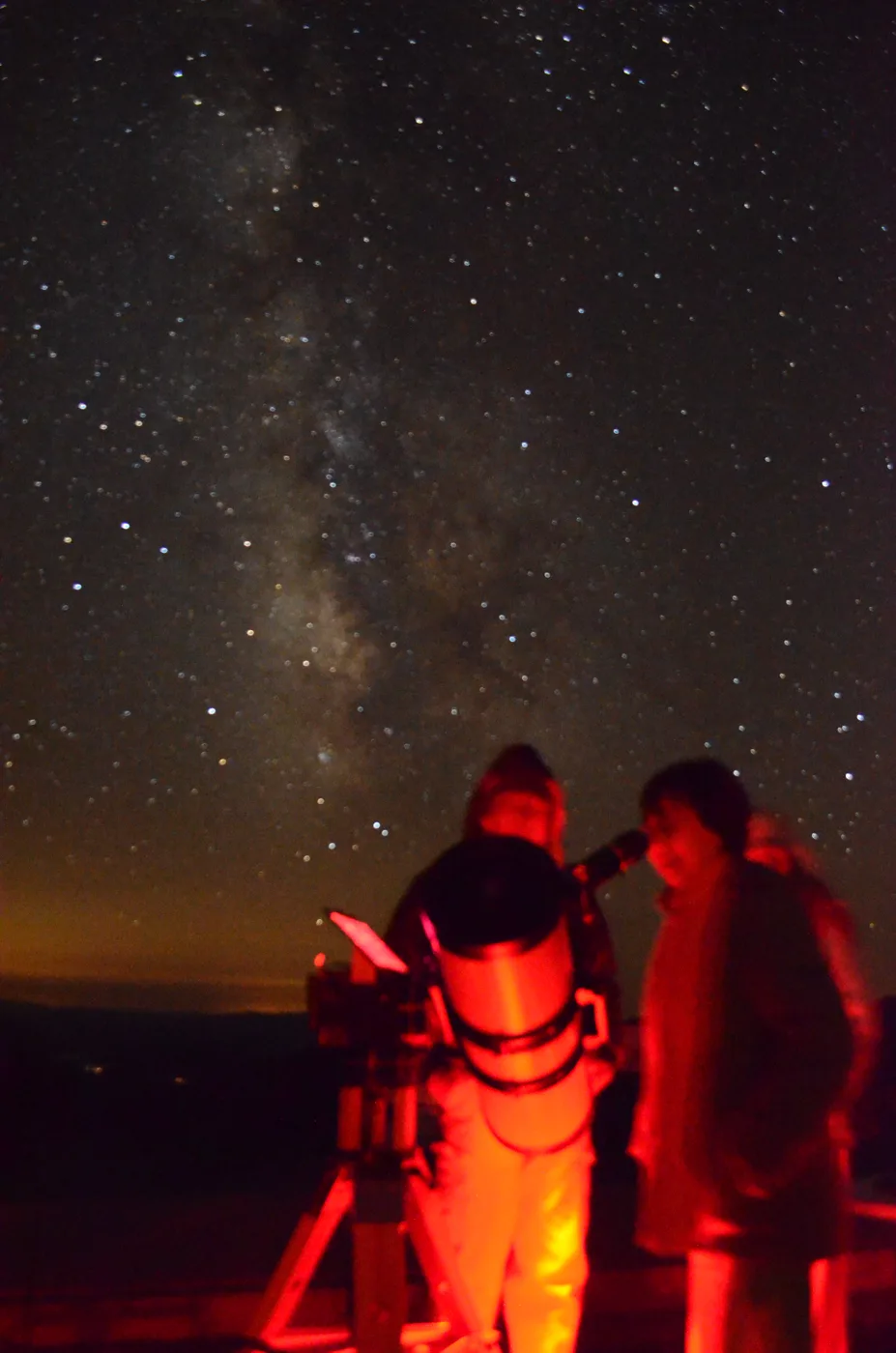
Deciding between a telescope or binoculars for stargazing is the first real fork in the road for anyone new to astronomy, and it is easy to get talked into the wrong one. The shops push telescopes because they cost more, and the pictures on the box promise Saturn’s rings filling the eyepiece. The reality is quieter and more useful: for most beginners, a decent pair of binoculars teaches you the sky faster, costs far less, and is the tool you will actually keep reaching for. This guide lays out what each one really does so you can spend once and spend well.
The short answer
If you have never looked at the night sky through anything, buy binoculars first. A 10x50 pair shows you enough to fall in love with observing, needs no setup, and survives the honest test that catches out most first telescopes: whether you still use it in month three. Experienced amateurs say the same thing so often it has become a cliche, and the reason is simple. Binoculars remove friction. You grab them off the shelf, step outside, and you are observing in ten seconds. A telescope asks for a tripod, an alignment, a hunt for the object, and a fiddle with eyepieces before you see anything at all.
That does not make telescopes wrong. It makes them the second purchase, not the first, for a large majority of people.
What binoculars actually show you
A good 10x50 gathers far more light than your eye and widens the sky into something layered and three-dimensional. From a reasonably dark UK site you will see craters and mountain ranges along the Moon’s terminator, the four bright moons of Jupiter shifting position night to night, open clusters like the Pleiades and the Beehive sitting in a rich field of stars, the Andromeda Galaxy as a soft grey oval, and the summer Milky Way breaking into countless pinpricks. That is a serious amount of astronomy for the money.
What binoculars will not give you is planetary detail. Jupiter stays a bright dot, Saturn’s rings are invisible, and nebulae stay grey rather than glowing with the colour you see in photographs. Our full guide to binoculars for stargazing explains why 10x50 has been the default first pair for decades, and what the two numbers on the barrel mean.
What a telescope adds
A telescope trades convenience for magnification and aperture. This is where Saturn grows its rings, Jupiter shows cloud belts, the Moon fills the view with detail, and the Orion Nebula becomes a structured cloud rather than a smudge. If your dream is specifically to see the planets, or to move towards astrophotography, a telescope is the tool that gets you there.
The catch is the learning curve. The cheapest telescopes come on wobbly mounts that shake at every touch, and a badly chosen scope puts more people off astronomy than it ever brings in. If you do go straight to a telescope, choose carefully: our guide to buying your first telescope and our pick of the best telescopes for beginners in the UK steer you away from the traps. It is also worth reading are cheap telescopes worth it before you spend anything under £50.
How to decide between a telescope or binoculars for stargazing
Answer three questions honestly.
- Will you actually go outside? If clear nights are rare where you live and you know you will only observe now and then, binoculars win on sheer convenience. If you are committed and will set up regularly, a telescope earns its keep.
- What do you most want to see? Wide sweeps of the Milky Way, star clusters and learning the constellations favour binoculars. Close-up planets and the Moon favour a telescope.
- What is your budget? A good 10x50 costs a fraction of a capable beginner telescope. If money is tight, binoculars give you far more astronomy per pound, with the bonus that they double for daytime wildlife and landscapes.
For a great many beginners, the smartest path is both, in order: binoculars now to learn the sky, a telescope later once you know which objects you want to chase.
Why starting with binoculars pays off
Learning the night sky is a skill, and binoculars are the best teacher because they show a wide, right-way-up field that matches what you see with the naked eye. You learn to star-hop, to recognise constellations, and to find your way to fainter targets. When you later graduate to a telescope with its narrow, often inverted view, that hard-won familiarity is exactly what stops the frustration of not being able to find anything. The British Astronomical Association makes the same point in its guidance for beginners: learn the sky first, then add magnification.
Whichever way you lean, buy for the observing you will really do, not the observing you imagine. The best instrument in astronomy is the one that is easy enough to use that you keep using it.
Frequently asked questions
Should a beginner buy a telescope or binoculars first? Binoculars first, for most people. A 10x50 pair is cheaper, needs no setup, shows the Moon, Jupiter’s moons, star clusters and the Milky Way, and teaches you the sky. Add a telescope later once you know which objects you want to see close up.
Can you see planets with binoculars? You can see the planets as bright points and spot Jupiter’s four largest moons, but binoculars do not show planetary detail. Saturn’s rings and Jupiter’s cloud belts need the magnification of a telescope.
Are binoculars really good enough for stargazing? Yes. A decent pair shows craters on the Moon, open clusters like the Pleiades, the Andromeda Galaxy and rich Milky Way star fields. Many experienced observers use binoculars more often than their telescope because they are so quick to grab.
What can a telescope show that binoculars cannot? Planetary detail such as Saturn’s rings and Jupiter’s cloud bands, fine lunar features, and structure in nebulae and galaxies. A telescope also opens the door to astrophotography, which binoculars cannot support.
Is it worth buying both binoculars and a telescope? For committed beginners, yes, and in that order. Binoculars stay useful forever as a grab-and-go instrument for wide sweeps and quick looks, while the telescope handles close-up detail. Many amateurs keep a 10x50 within reach for years after buying a scope.
Clear skies forecast? Get a nudge.
Our weekly email flags the next good UK observing window and one easy target to find.
Join the listMore from Starvest
Keep reading
Best Telescopes for Beginners in the UK (Tested by Price Bracket)
The best beginner telescopes in the UK by budget, from sub-£150 tabletop scopes to app-guided and smart telescopes, with real 2026 prices.
What Can You See with Binoculars at Night? A Realistic Astronomy List
A realistic list of what you can see with binoculars in astronomy, from the Moon and Jupiter's moons to Andromeda, with tips for spotting each from the UK.
How to Set Up and Use Your First Telescope (Step by Step)
How to use a telescope as a beginner: assemble the mount, align the finder, focus, and find your first targets. A clear step-by-step UK guide.