Astronomical Seeing Explained: Read the Sky Before You Zoom
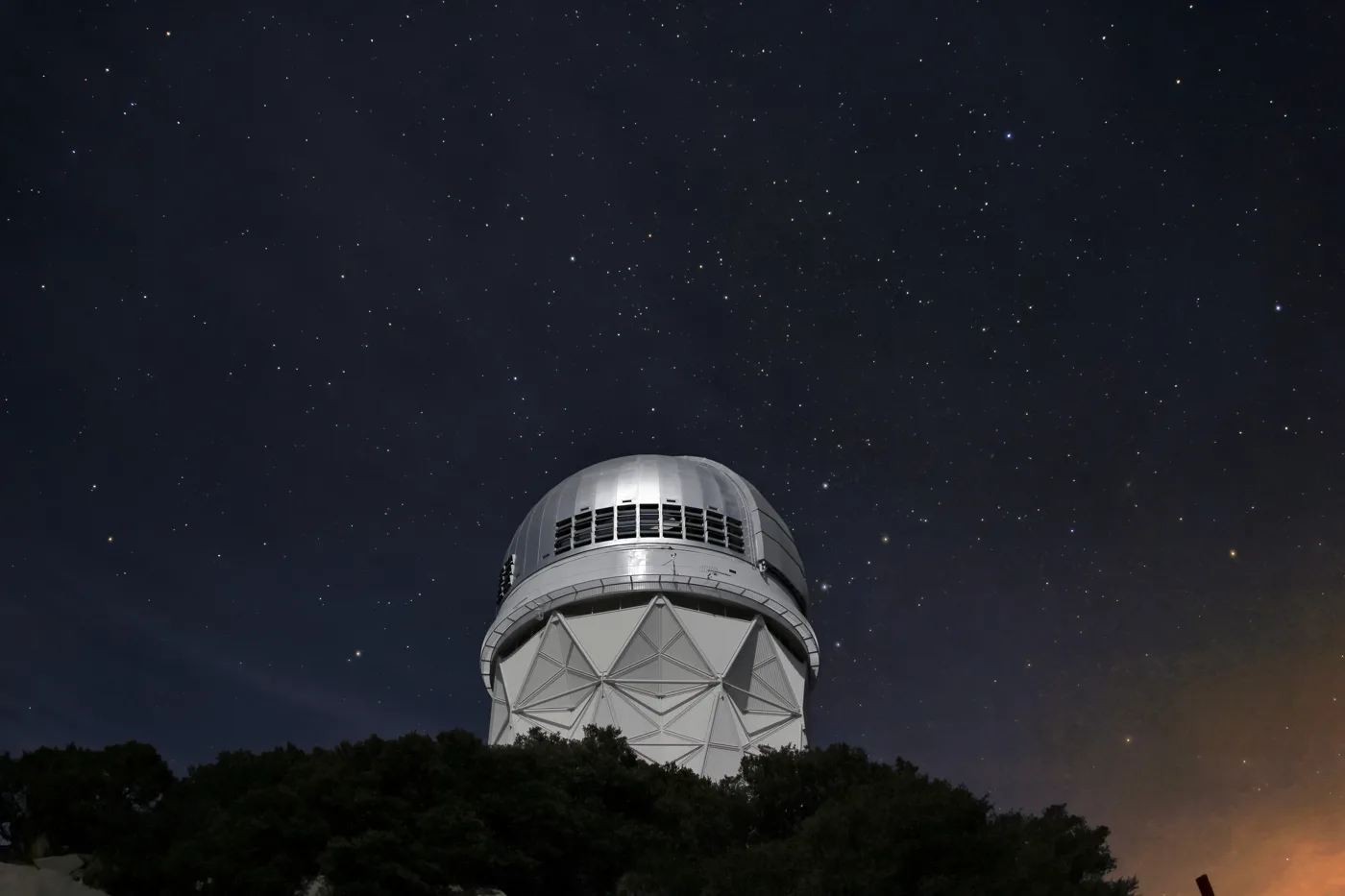
You have collimated the scope, the sky is cloudless, Jupiter is high, and the view still looks like a coin at the bottom of a swimming pool. That is astronomical seeing explained in one sentence: the atmosphere between you and the planet is not still, and no amount of money spent on optics will make it still.
Seeing is the single most misunderstood variable in amateur astronomy. People blame the telescope, the eyepiece, the collimation, and buy a bigger instrument that makes the problem look worse. This page explains what seeing actually is, how observers grade it, how to forecast it in the UK, and what to do on a night when it is poor.
Seeing is not transparency, and the difference matters
Two separate things can spoil a night, and they often pull in opposite directions.
Transparency is how much light gets through: haze, thin cloud, dust, humidity. Poor transparency dims faint things. It ruins galaxy and nebula hunting.
Seeing is how steady the air is: layers of air at different temperatures refracting starlight in slightly different directions, many times a second. Poor seeing smears fine detail. It ruins planets, the Moon at high power, and double stars.
The frustrating part is that the clearest, most transparent nights are frequently the worst for seeing. A crisp night behind a cold front, with the stars glittering hard, means brisk mixing in the atmosphere. Twinkling stars are a bad sign, not a romantic one. A slightly hazy, muggy, still night with the stars looking flat and dull is often when planetary detail snaps into focus.
What actually causes it
The British Astronomical Association groups the causes into three layers, and they are worth separating because you can only do something about two of them.
High altitude. The jet stream, a ribbon of very fast air five to ten miles up, sits over the UK for much of the year and creates severe turbulence. The BAA is blunt that the jet stream “creates very bad seeing conditions”. You cannot influence it, but you can forecast it.
Local ground and buildings. Heat stored in tarmac, brick walls, patios and roofs radiates away for hours after sunset, and that rising warm air passes straight through your line of sight. Observing over a neighbour’s roof or across a driveway is measurably worse than observing over grass.
The telescope itself. A tube full of air that is warmer than the night sky produces its own turbulence, right where it does the most damage. This is the one most beginners never consider.
Grading it: the Antoniadi and Pickering scales
Two scales are in common use, and you will see both quoted in forecasts and observing reports.
The Antoniadi scale, devised by Eugène Antoniadi, runs from I to V with I as the best:
- I Perfect seeing, no quivering at all
- II Slight quivering, with calm moments lasting several seconds
- III Moderate seeing, larger air tremors that blur the image
- IV Poor seeing, constant troublesome undulations
- V Very bad, barely stable enough for a rough sketch
Confusingly, the Pickering scale runs the other way, from 1 to 10 with 10 as the best. On Pickering, 1 to 3 is very poor, 4 to 5 poor, 6 to 7 good, and 8 to 10 excellent. If someone reports “seeing 3”, check which scale they mean, because it is either awful or awful for opposite reasons.
Forecast sites tend to use a third measure: arcseconds. This is the diameter that a point star gets smeared into. Smaller is better. On a typical suburban UK night you are working with something in the region of 2 to 4 arcseconds. Under 2 is a good night. Professional mountaintop sites chase figures under 1, which is why they are on mountaintops.
Why seeing beats aperture, with the arithmetic
Dawes’ limit gives a telescope’s theoretical resolving power as R = 116 / D, where R is arcseconds and D is the aperture in millimetres. A 116mm telescope therefore resolves to about 1 arcsecond in theory. A 232mm telescope resolves to about 0.5.
Now put a 2 arcsecond seeing disc over both. Neither instrument can deliver its theoretical figure, because the atmosphere has already smeared everything to 2 arcseconds before the light reaches the objective. The bigger scope collects more light and shows fainter things, but on that night it will not show finer planetary detail than the smaller one. Worse, a large aperture samples a wider column of turbulent air, so the image often looks visibly more mobile and mushy through the big scope while the small one holds a steadier picture.
This is the honest answer to why an experienced observer with a 4 inch refractor sometimes sees more Jovian belt structure than a beginner with a 10 inch reflector. It is not mysticism. It is the atmosphere plus a cooled tube plus patience. There is more on the aperture side of this trade-off in our guide to telescope aperture.
How to forecast seeing in the UK
You cannot control it, but you can pick your nights.
meteoblue’s Astronomy Seeing page is the most useful free tool. It publishes two independent seeing indices, computed from turbulent layers in the atmosphere rather than from cloud, plus arcsecond estimates and a jet stream row. meteoblue’s own documentation gives a rule that is easy to remember: jet stream speeds above about 35 m/s usually mean bad seeing, and so, oddly, do speeds below about 5 m/s. You want moderate flow, not a hurricane and not dead calm. Green values in the seeing indices and jet stream rows are what you are hunting for.
Clear Outside, run by First Light Optics in Devon, gives a seven day hourly forecast with low, medium, high and total cloud, plus temperature, dew point and frost risk. It is the standard UK cloud forecast and pairs well with meteoblue for the turbulence side. Both have apps, and we cover the wider set in the best stargazing apps.
Jet stream charts are worth a separate look. The BAA recommends watching where the jet is sitting. If the ribbon is directly over you, plan a deep-sky night instead of a planetary one.
The seasonal pattern is real: UK winter gives you long dark hours and high planets, but it is also when the jet stream most often parks over the country. Some of the steadiest UK seeing arrives on muggy summer nights when nobody wants to be outside at 1am. Our best time of year for stargazing in the UK sets out the trade-off across the calendar.
Five things to do on a poor-seeing night
- Cool the telescope properly. Take it outside well before you observe. A small refractor may settle in twenty minutes; a large Schmidt-Cassegrain or a thick-mirrored reflector can need an hour or more. Observing through a warm tube is self-inflicted bad seeing.
- Drop the magnification. The BAA’s advice is straightforward: avoid high magnification once seeing is Antoniadi III or worse. A sharp small image beats a large mushy one every time.
- Observe things that are high up. An object at 30 degrees altitude is being viewed through roughly twice the air of one overhead. Wait for the target to climb rather than chasing it at the horizon.
- Get off the tarmac. Set up over grass or soil, away from walls, and out of the plume rising off a house roof.
- Switch targets. Poor seeing with good transparency is ideal for galaxies, clusters and nebulae at low power. Save the planets for the flat, still, unglamorous night. Our guide to seeing the planets covers what each one needs.
And keep a note of the seeing grade against every observation you make. After a season you will know your own site’s pattern better than any forecast can tell you: which wind directions ruin it, which months deliver, and which hour of the night your patio finally stops breathing warm air at the sky.
If your images look soft on every night regardless of conditions, the problem is probably not the atmosphere. Work through why a telescope image looks blurry first.
Frequently asked questions
What is astronomical seeing in simple terms? Astronomical seeing is a measure of how steady the atmosphere is above you. Layers of air at different temperatures bend starlight slightly differently many times a second, which smears fine detail. Good seeing means a still image; bad seeing means the view boils and ripples.
Is twinkling a sign of good or bad seeing? Bad. Stars twinkling hard means the air is turbulent. The best planetary nights often look dull and flat to the naked eye, with stars shining steadily rather than sparkling.
What are typical seeing figures in the UK? Most UK backyard sites work with roughly 2 to 4 arcseconds. Anything under 2 arcseconds is a good night here. Sub-arcsecond seeing is essentially a high-altitude professional observatory phenomenon.
Does a bigger telescope help in poor seeing? Not for fine detail. Once the atmosphere has smeared the image to 2 arcseconds, no aperture resolves better than that. A larger aperture also looks through a wider column of turbulent air, so the image can appear more unstable than in a smaller scope on the same night.
How do I check seeing before going out? Use meteoblue’s Astronomy Seeing page for the seeing indices, arcsecond estimate and jet stream speed, and Clear Outside for the hour by hour cloud. Aim for green seeing indices and a jet stream that is neither very fast nor completely stalled.
What is the difference between seeing and transparency? Transparency is how much light gets through the air and governs how faint an object you can detect. Seeing is how steady the air is and governs how much fine detail you can resolve. A night can easily be excellent for one and poor for the other.
Sources
Clear skies forecast? Get a nudge.
Our weekly email flags the next good UK observing window and one easy target to find.
Join the listMore from Starvest
Keep reading
Best Telescopes for Beginners in the UK (Tested by Price Bracket)
The best beginner telescopes in the UK by budget, from sub-£150 tabletop scopes to app-guided and smart telescopes, with real 2026 prices.
What Can You See with Binoculars at Night? A Realistic Astronomy List
A realistic list of what you can see with binoculars in astronomy, from the Moon and Jupiter's moons to Andromeda, with tips for spotting each from the UK.
How to Set Up and Use Your First Telescope (Step by Step)
How to use a telescope as a beginner: assemble the mount, align the finder, focus, and find your first targets. A clear step-by-step UK guide.