How to See Mercury From the UK: Next Chance 20 November
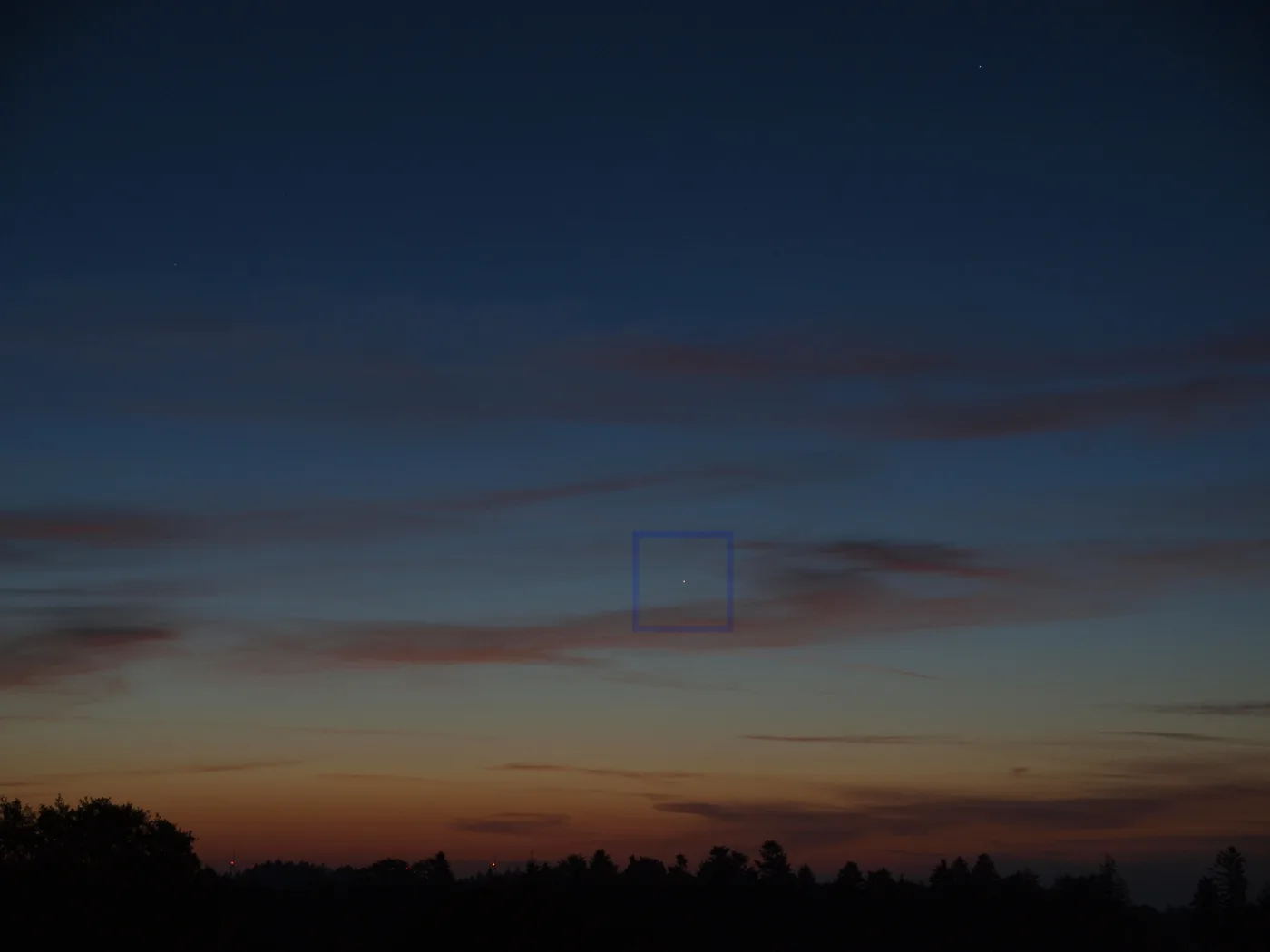
How to see Mercury from Britain comes down to two things: picking one of the few good weeks each year, and having a flat horizon in the right direction. Get those right and it is easy, a steady pinkish-white point in the twilight, bright enough to see with the naked eye. Get them wrong and you can look for years without finding it. Copernicus is often said to have died without ever seeing it; the story may be apocryphal, but it tells you how low and fleeting Mercury is from northern Europe.
The next good chance from the UK is the morning of 20 November 2026, before sunrise in the south-east. Below is when to look, where, and every favourable window to the end of 2028.
Why Mercury is so hard to catch from Britain
Mercury orbits close to the Sun, so from Earth it never strays more than about 28 degrees from it. It is only visible in twilight: low in the west after sunset, or low in the east before sunrise. Each of these spells is called an apparition, and the moment Mercury is farthest from the Sun in the sky is its greatest elongation. There are six a year, alternating between evening (eastern elongation) and morning (western elongation).
The catch for UK observers is the angle of the ecliptic, the path the planets follow. At 51 to 58 degrees north, that line meets the horizon at a steep angle on spring evenings and autumn mornings, so Mercury stands well clear of the horizon. On autumn evenings and spring mornings the ecliptic lies almost flat, and Mercury stays buried in the murk even at a wide elongation. That is why the size of the elongation tells you little on its own: the 12 October 2026 evening elongation was a wide 25 degrees and Mercury never got above the horizon from London at the start of proper twilight.
Every Mercury window from the UK to 2028
Altitudes below are for London when the Sun is 6 degrees below the horizon (the end of civil twilight), from Sterngucker’s elongation tables, which rate each one for 51.5 degrees north. Scotland sees slightly lower altitudes in winter and lighter skies in summer.
| Greatest elongation | When to look | Height above horizon (London) | UK verdict |
|---|---|---|---|
| 20 November 2026 | Morning, south-east | 10.5 degrees at 06:49 | Good |
| 3 February 2027 | Evening, west-south-west | 9.3 degrees at 17:28 | Good |
| 17 March 2027 | Morning, east-south-east | 0.6 degrees | Poor |
| 28 May 2027 | Evening, west-north-west | 9.3 degrees at 21:47 | Good |
| 15 July 2027 | Morning, east-north-east | 4.1 degrees, up to 5.6 around 22 July | Moderate |
| 24 September 2027 | Evening, west | Below the horizon | Poor |
| 4 November 2027 | Morning, east-south-east | 10.7 degrees at 06:23 | Good |
| 17 January 2028 | Evening, south-west | 7.7 degrees at 17:01 | Good |
| 9 May 2028 | Evening, west-north-west | 11.1 degrees at 21:17 | Good |
| 18 October 2028 | Morning, east-south-east | 10.6 degrees at 06:56 | Good |
You do not need to look on the exact date. Mercury is usually well placed for about a week either side of a good elongation, and in the morning apparitions it often looks highest a few days after the date in the table, as it brightens. Times are GMT in winter and BST in summer.
How to see Mercury on 20 November 2026
This morning apparition favours the northern hemisphere. The planet reappears in the eastern sky in the second week of November after passing between us and the Sun on 4 November, reaches greatest elongation on 20 November at 19.6 degrees from the Sun, and shines at about magnitude -0.5, brighter than any star in that part of the sky.
- Find a low south-eastern horizon. At 10 degrees up, Mercury sits about the width of your fist held at arm’s length above the skyline. A row of houses or trees will hide it. A hilltop, a beach facing east or an upstairs window over open ground works. Our dark sky sites list includes plenty with open horizons, but you do not need darkness for Mercury, only a clear horizon.
- Go out about an hour before sunrise. Around 06:30 to 06:50 GMT from southern England. Earlier and it is too low; later and the brightening sky swallows it.
- Sweep with binoculars first. Scan just above the horizon in the south-east. Mercury shows as a steady point that does not twinkle as hard as a star near the horizon. Once you have it in binoculars, lower them and you will usually find it with the naked eye. Any pair works; see binoculars for stargazing if you are choosing.
- Stop once the Sun is close to rising. Put the binoculars away well before sunrise. Never sweep near the Sun with binoculars or a telescope: one accidental glimpse can cause permanent eye damage. Our page on observing the Sun safely explains why.
What you will see through a telescope
Mercury is small, between about 5 and 10 arcseconds across, and seen through the thick, turbulent air near the horizon. In a small telescope at 50 to 100x it shows as a tiny disc with a phase, like a miniature Moon: around half lit at greatest elongation, a fatter gibbous shape as it heads back towards the Sun, and a thin crescent near inferior conjunction. Do not expect surface detail. Seeing that low down is almost always poor; our explainer on astronomical seeing covers why.
Experienced observers find Mercury in the daytime with a Go-To telescope and keep the instrument shaded, because it is then higher and the image steadier. That is not a beginner’s technique, since it means working close to the Sun. If you want to try it, fit a sunshade, aim the telescope with the Sun blocked by a building, and never use a finderscope that is not capped.
Tips that make it easier
- Use a planetarium app to check the exact position for your town on the morning. Stellarium and SkySafari both show Mercury against your local horizon; our stargazing apps page compares them.
- Use a brighter neighbour as a guide when one is close. Venus and Jupiter pair up with Mercury at some apparitions; check the app for that week.
- Try three mornings. Haze near the horizon kills Mercury more often than cloud. A clear, crisp morning after a cold front is the best bet.
- Do not confuse it with a star. Low in twilight, very few stars are bright enough to show. A bright point exactly where your app says is almost certainly Mercury.
For the other planets and when each one is best placed, see our page on how to see the planets.
Frequently asked questions
How do I see Mercury from the UK? Look in the south-east about an hour before sunrise around 20 November 2026, or in the west-south-west after sunset around 3 February 2027. You need a flat, clear horizon; binoculars help you find it, then it is usually visible to the naked eye.
When is the best time to see Mercury in 2026? For the rest of 2026, the morning of 20 November is the one good chance from the UK. Mercury will be about 10 degrees above the south-eastern horizon at 06:49 GMT from London, at around magnitude -0.5.
Can you see Mercury with the naked eye? Yes. At a good elongation it is brighter than nearly every star near it. The problem is never brightness, only how low it is and how bright the twilight is around it.
Why is Mercury easier to see in spring evenings and autumn mornings? At UK latitudes the ecliptic meets the horizon at a steep angle at those times, so Mercury stands higher above the skyline at the same distance from the Sun. On autumn evenings and spring mornings it lies low along the horizon.
What does Mercury look like through a telescope? A small, often shimmering disc showing a phase, like a tiny Moon. Near greatest elongation it is about half lit. Surface features are beyond small telescopes, especially through the turbulent air close to the horizon.
Is it safe to look for Mercury with binoculars? Yes, provided the Sun is below the horizon. Stop sweeping well before sunrise in the morning, and only start after sunset in the evening, because pointing binoculars at the Sun even briefly can permanently damage your eyes.
Sources
- Sterngucker, greatest elongations of Mercury and Venus 2026 to 2028, rated for London (51.5 degrees north), read 16 October 2026.
- Obliquity.com, Mercury apparitions in 2026 (conjunction and elongation dates).
- EarthSky, Mercury’s November 2026 morning apparition (magnitude and elongation).
Clear skies forecast? Get a nudge.
Our weekly email flags the next good UK observing window and one easy target to find.
Join the listMore from Starvest
Keep reading
Best Telescopes for Beginners in the UK (Tested by Price Bracket)
The best beginner telescopes in the UK by budget, from sub-£150 tabletop scopes to app-guided and smart telescopes, with real 2026 prices.
What Can You See with Binoculars at Night? A Realistic Astronomy List
A realistic list of what you can see with binoculars in astronomy, from the Moon and Jupiter's moons to Andromeda, with tips for spotting each from the UK.
How to Set Up and Use Your First Telescope (Step by Step)
How to use a telescope as a beginner: assemble the mount, align the finder, focus, and find your first targets. A clear step-by-step UK guide.