Comet 220P Flares 20,000x Brighter, Now in Binoculars
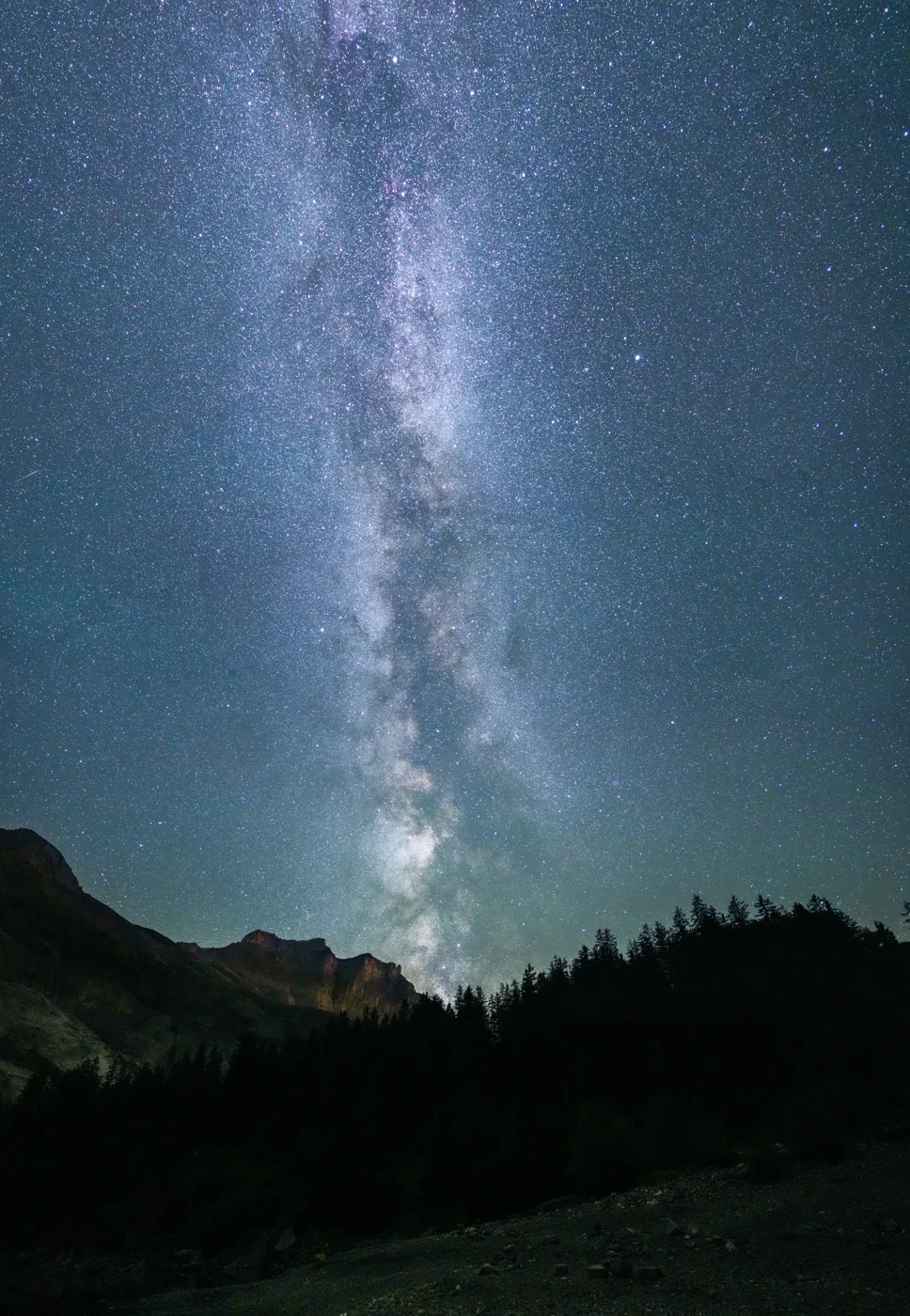
One comet has done something strange enough to bring it within reach of ordinary binoculars, a telescope that will remap the sky launches on Sunday, and September gives UK observers back some proper darkness. Here is what is worth your time.
Comet 220P/McNaught is about 20,000 times brighter than it should be
Comet 220P/McNaught is normally a telescope-only object, faint and unremarkable. Two unexplained outbursts this year have made it roughly 20,000 times brighter than usual, and it is now within reach of binoculars and long-exposure photography. NASA’s Astronomy Picture of the Day featured it on 24 August with an image by Spilios Asimakopoulos taken from South Africa, showing a bright green head and a short dust tail.
It sits high in the dawn sky. The green comes from diatomic carbon fluorescing in sunlight, which is why the head glows green while the dust tail stays pale. The comet orbits between Mars and Jupiter on a period of a little over five years, and will come within about one Earth-Sun distance of us in October before fading back out. Nobody knows what caused the outbursts. The candidates are a pocket of subsurface gas breaking through the crust, or a structural collapse, sometimes called a comet quake.
Two practical notes if you want to try. This is a pre-dawn object, so you are looking east before twilight builds, and you want the darkest sky you can reach rather than the biggest instrument. A comet in outburst is diffuse, not point-like, so wide field and low magnification beat aperture: a 10x50 will often show it better than a long-focal-length telescope. Our comparison of 10x50 versus 15x70 binoculars for astronomy covers the trade-off, and if you are new to finding faint fuzzy objects, how to find objects with a telescope applies just as well to binoculars. The image and explanation are at APOD.
Roman launches on 30 August at 12:26 BST
NASA’s Nancy Grace Roman Space Telescope is scheduled to lift off on 30 August at 07:26 EDT, which is 12:26 BST, on a SpaceX Falcon Heavy from Launch Complex 39A at Kennedy Space Center. NASA coverage starts about an hour earlier, and there is a backup attempt on 31 August at 07:22 EDT, 12:22 BST.
The number that explains Roman is not its mirror, it is its field of view. The primary mirror is 2.4 metres, exactly the same as Hubble’s. But its Wide Field Instrument is a roughly 300-megapixel near-infrared camera that captures about a hundred times more sky than Hubble in a single exposure, at comparable sharpness. That is what turns a telescope from an instrument you point at known objects into a survey machine. The mission is built to map dark energy and dark matter and to find exoplanets by microlensing, where a foreground star briefly magnifies a background one; the estimate is on the order of 100,000 new worlds, which would exceed everything found so far put together.
It is worth watching for the same reason the Rubin Observatory’s first images were worth watching. Rubin surveys at visible wavelengths from the ground; Roman does it in the infrared from space. Between them, most of the sky gets catalogued repeatedly, and the objects amateurs chase get discovered years before they are famous. Launch details are at NASA.
September brings back real darkness, plus a spacecraft passing 9,000 km overhead
The autumn equinox falls at 1:06am BST on 23 September, and for UK observers that is the practical turning point of the year. Astronomical darkness disappears from much of Britain in June and comes back properly in September, so a target that was hopeless in July becomes straightforward now, with no need to stay up until 1am to start.
The full Moon nearest the equinox falls on the night of 26 September, which makes it the Harvest Moon. That is worth planning around rather than looking forward to: a full Moon washes out everything faint, so the deep-sky half of the month is the stretch either side of it, not the week around it.
Also in September, ESA’s JUICE mission makes its first Earth flyby on its way to the Jupiter system, passing within 9,000 km of Earth, which the Royal Observatory lists as one of the month’s highlights. Watch for a published ephemeris nearer the time if you want to attempt it, because a pass that close moves fast and blind hunting will not work.
If you are trying to make use of the returning darkness, our guide to UK dark sky sites is the place to start, and what to see in the night sky covers what is well placed at this time of year. The Royal Observatory’s calendar is at Royal Museums Greenwich.
Clear skies forecast? Get a nudge.
Our weekly email flags the next good UK observing window and one easy target to find.
Join the listMore from Starvest
Keep reading
Best Telescopes for Beginners in the UK (Tested by Price Bracket)
The best beginner telescopes in the UK by budget, from sub-£150 tabletop scopes to app-guided and smart telescopes, with real 2026 prices.
What Can You See with Binoculars at Night? A Realistic Astronomy List
A realistic list of what you can see with binoculars in astronomy, from the Moon and Jupiter's moons to Andromeda, with tips for spotting each from the UK.
How to Set Up and Use Your First Telescope (Step by Step)
How to use a telescope as a beginner: assemble the mount, align the finder, focus, and find your first targets. A clear step-by-step UK guide.