Telescope Accessories Every Beginner Actually Needs
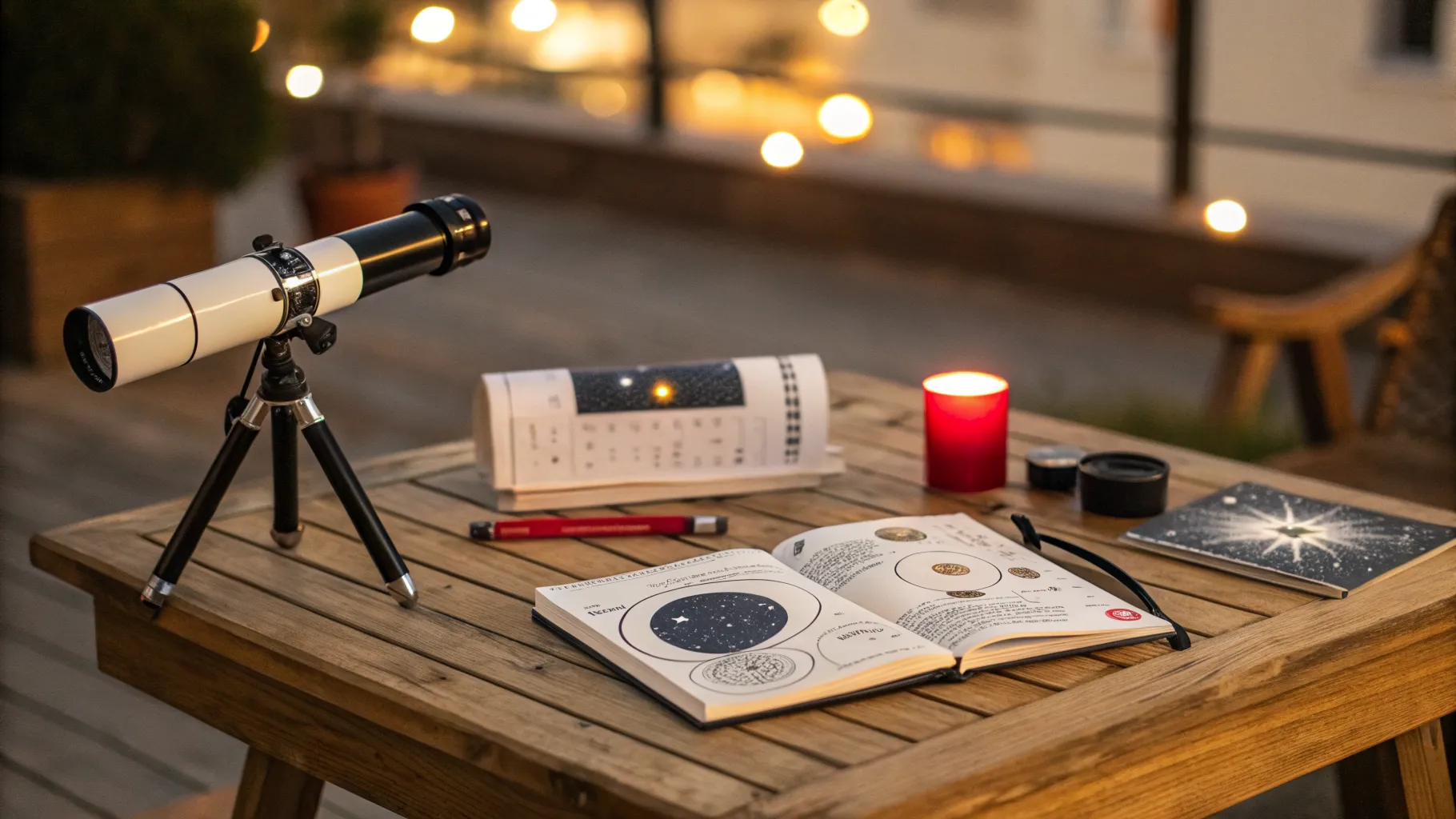
Telescope Accessories Every Beginner Actually Needs
The right telescope accessories for beginners are the cheap, unglamorous bits that make a new scope far easier to use, and the wrong ones are the shiny kits that sit in a drawer. Most beginner telescopes come with one or two eyepieces and not much else, so a small amount spent in the right place transforms your first few nights from frustrating to genuinely rewarding. This guide covers what actually earns its place next to a starter scope, what can wait, and what to skip altogether.
If you are still choosing a scope, start with our best telescopes for beginners guide first, then come back here to kit it out.
A second eyepiece (the upgrade that matters most)
The eyepiece does as much for the view as the telescope itself, and the budget eyepieces bundled with cheaper scopes are usually the weakest part of the package. Most telescopes ship with a low-power eyepiece (a longer focal length, such as 25mm) that gives a wide, bright view, and sometimes a high-power one that is often too much for UK skies to handle cleanly.
A good mid-range eyepiece, a quality 32mm for sweeping the sky or a sharp 8mm to 10mm for the Moon and planets, is the single best improvement you can make. Look at well-reviewed Plossl or “gold-line” type eyepieces in the 1.25 inch fitting that almost all beginner scopes use. You do not need an expensive set on day one; one good eyepiece beats five mediocre ones.
A Barlow lens
A Barlow lens sits between your eyepiece and the telescope and multiplies the magnification, usually by two. Pair a 2x Barlow with two eyepieces and you effectively have four magnifications to choose from, which is excellent value. It is one of the most useful early purchases because it doubles your options without doubling your spend. A decent achromatic or apochromatic 2x Barlow is worth more than a cheap throwaway one.
A Moon filter
The full Moon through a telescope is dazzling, bright enough to leave an afterimage. A simple Moon filter screws into the bottom of your eyepiece and cuts the glare so you can pick out craters, ridges and the dark lunar seas in comfort. It is inexpensive and one of the first accessories most new observers are glad they bought. Coloured planetary filters (an orange for Mars, a blue for Jupiter’s cloud bands) can come later once you know what you like observing.
A red torch
Your eyes take 20 to 30 minutes to fully adapt to the dark, and one glance at a white phone screen undoes it instantly. A red torch lets you read a star chart, find an eyepiece or adjust the scope without wrecking your night vision, because deep red light barely affects dark adaptation. A dedicated astronomy red torch with a dimmer is ideal, but a normal torch with red film over it works to start. This is a small spend with a big payoff.
A planisphere or a stargazing app
You cannot point a telescope at something you cannot find. A planisphere, a rotating star wheel set to your date and time, shows what is up tonight, and it never needs charging. A free stargazing app does the same job with a live sky map you hold up to the heavens. Either one shortens the gap between setting up and actually seeing something. Our roundup of the best stargazing apps covers the free and paid options.
A collimation tool (for reflectors)
If your scope is a Newtonian reflector, its mirrors drift out of alignment over time, and a misaligned scope gives soft, disappointing views no eyepiece can fix. A collimation cap (often free in the box) or an inexpensive Cheshire collimator lets you bring the mirrors back into line in a few minutes. Refractor owners can skip this; their lenses do not need it. See our guide on how to collimate a telescope for the full process.
Useful extras as you progress
- A carry case or padded bag to protect eyepieces and stop dew and dust getting in.
- A dew shield or dew heater for damp British nights, where lenses and mirrors fog over fast.
- A power bank if you have a tracking or smart scope that runs on batteries.
- A comfortable observing chair, because an aching back ends sessions early.
What to skip at first
- Huge eyepiece-and-filter kits. They look like value but are usually padded with low-quality glass and filters you will never use. One or two good eyepieces beat a boxed set of ten.
- Extreme high-power eyepieces. UK skies rarely support very high magnification, so a 4mm eyepiece often just gives a dim, wobbly blur. Aperture and steady air matter more than magnification, as our telescope aperture guide explains.
- Cheap “2x to 3x zoom” smartphone adapters that promise easy astrophotography. Photographing through a beginner scope is fiddly, and a poor adapter only adds frustration.
A sensible first shopping list
For most beginners, this short list covers it: one good mid-power eyepiece, a 2x Barlow, a Moon filter, a red torch, and a planisphere or app. That handful turns a basic starter scope into something you will actually keep using, all without spending close to the price of the telescope again. UK retailers such as First Light Optics carry all of these and are a reliable place to compare options. Check current prices before you buy, as accessory ranges change often.
Frequently asked questions
What is the single most useful telescope accessory for a beginner? A good second eyepiece. The eyepiece shapes the view as much as the telescope does, and the ones bundled with budget scopes are usually the weakest part, so one quality eyepiece is the biggest single upgrade.
Do I need to buy extra eyepieces straight away? Not many. One good mid-power eyepiece plus a 2x Barlow gives you several useful magnifications. Avoid large boxed eyepiece kits, which tend to pad the count with low-quality glass.
Are telescope filters worth it for beginners? A Moon filter is, because the full Moon is genuinely too bright through a scope and the filter reveals far more detail. Coloured planetary filters are a nice extra later but not essential at the start.
Why do I need a red torch for stargazing? White light resets your night vision, which takes 20 to 30 minutes to build. A red torch lets you read charts and adjust the scope without destroying your dark adaptation.
Do all telescopes need a collimation tool? No. Newtonian reflectors need their mirrors aligned occasionally, so a collimation cap or Cheshire helps. Refractor telescopes do not need collimating, so reflector owners are the only ones who require the tool.
Can I do astrophotography with beginner accessories? Only basic shots of the Moon with a phone held to the eyepiece. Proper astrophotography needs tracking mounts and cameras, so it is better treated as a later step than a first accessory purchase.
Clear skies forecast? Get a nudge.
Our weekly email flags the next good UK observing window and one easy target to find.
Join the listMore from Starvest
Keep reading
Best Telescopes for Beginners in the UK (Tested by Price Bracket)
The best beginner telescopes in the UK by budget, from sub-£150 tabletop scopes to app-guided and smart telescopes, with real 2026 prices.
What Can You See with Binoculars at Night? A Realistic Astronomy List
A realistic list of what you can see with binoculars in astronomy, from the Moon and Jupiter's moons to Andromeda, with tips for spotting each from the UK.
How to Set Up and Use Your First Telescope (Step by Step)
How to use a telescope as a beginner: assemble the mount, align the finder, focus, and find your first targets. A clear step-by-step UK guide.