Stargazing in Scotland: Every Dark Sky Site and Car Park
Stargazing in Scotland gives you something no site in England can: latitude. Go far enough north and the summer nights never get properly dark, but from September through March the same latitude hands you longer nights than anywhere else in the UK, and a realistic shot at the aurora. What most guides to Scottish dark skies get wrong is that they list scenery rather than places you can stand in the dark for two hours. This one names the certified sites, the specific car parks with interpretation boards, and one well-known observatory that thin listicles still send people to even though it burned down five years ago.
Start here: the one that no longer exists
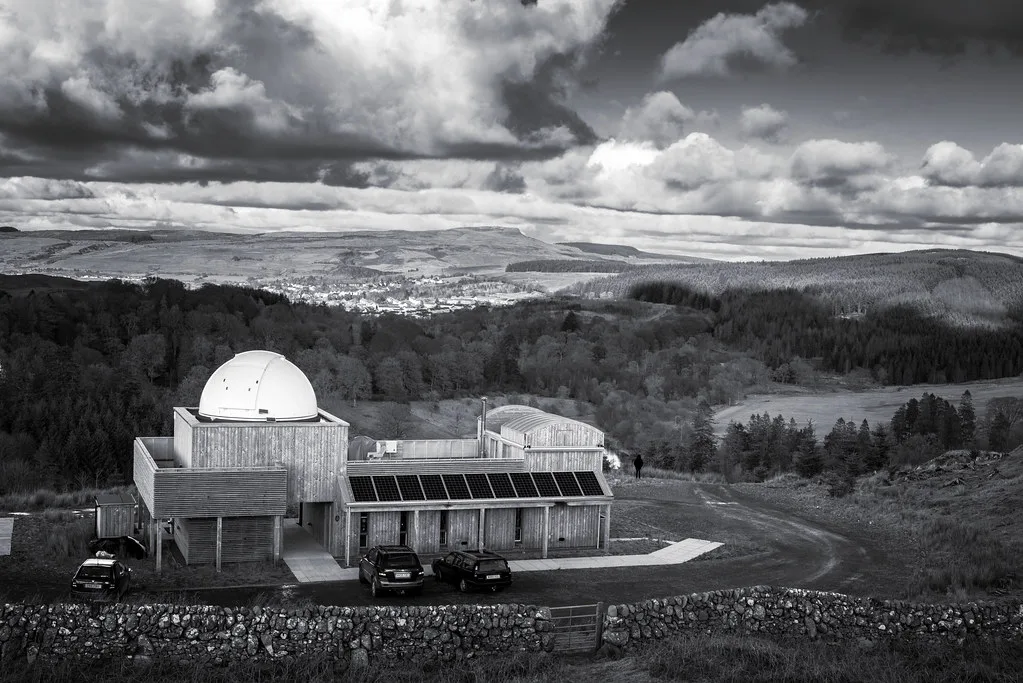
If a page tells you to visit the Scottish Dark Sky Observatory at Dalmellington, close it. The observatory, opened in 2012, was destroyed by fire in the early hours of 23 June 2021. In late 2023, after a feasibility study, the trustees confirmed it would not be rebuilt on the original site.
The good news is that it is not gone for ever. The trust bought the old visitor centre at Clatteringshaws Loch, inside Galloway Forest Park, with backing from South of Scotland Enterprise, and plans for a new £1.5m facility with two observing domes, a planetarium, a shop and a small cafe have been approved. It is not open yet. Do not build a trip around it until it announces a date, and check before you drive.
The certified sites, and what each is actually for
Scotland has six certified International Dark Sky Places, and they are not interchangeable. Two are parks you drive into, three are inhabited communities, and one is a sanctuary you need a ferry and a plan to reach.
| Site | Type | Where | What it suits |
|---|---|---|---|
| Galloway Forest Park | Dark Sky Park, gold tier, 2009 | Dumfries & Galloway | Drive-in, no booking, several named lochside car parks |
| Tomintoul and Glenlivet, Cairngorms | Dark Sky Park | Moray, Cairngorms National Park | Three signed Discovery Sites with car parks and boards |
| Isle of Coll | Dark Sky Community, 2013 | Inner Hebrides | No street lights at all, ferry trip, Oct to Mar |
| Moffat | Dark Sky Town, Europe’s first | Dumfries & Galloway | A base with beds and food, not a viewing site |
| North Ronaldsay | Dark Sky Island / Community, 2021 | Orkney | Extreme northern latitude, serious aurora odds |
| Isle of Rum | Dark Sky Sanctuary, 2024 | Inner Hebrides | Scotland’s darkest certified skies, hardest to reach |
Rum is the one worth understanding properly. It was designated in 2024 as Scotland’s first International Dark Sky Sanctuary, following an application by the Isle of Rum Community Trust and NatureScot. Sanctuary is the strictest tier DarkSky International awards, reserved for remote places with exceptionally dark skies, and there are only around twenty in the world. Bardsey Island in Wales is the only other one in Europe. If you want the darkest sky in the country and you are willing to plan a ferry and accommodation months out, that is where it is.
Galloway Forest Park: the drive-in option
Galloway is the practical choice for most people because you can turn up on a clear night with no arrangements. It was designated in 2009 as one of the first Dark Sky Parks in the world and holds gold tier status. Forestry and Land Scotland, which manages it, states that over 7,000 stars and planets are visible to the naked eye on a clear night, against the couple of hundred you would get from a suburban garden.
Forestry and Land Scotland names three spots on its own Galloway dark skies page:
- Clatteringshaws Loch. The most accessible, on the A712 between New Galloway and Newton Stewart, with a large car park and open water to the south. This is also where the new observatory is going.
- Stroan Loch. Quieter and further off the main road, reached by forest track. Check the surface and your clearance before committing in the dark.
- Glentrool. The northern end of the park, with the Loch Trool car park giving you a wide southern horizon over the water.
The visitor hub is at Kirroughtree. The park uses minimal lighting after dark, which is the point, so bring everything you need and assume no facilities are open.
Tomintoul and Glenlivet: the signed sites
The Cairngorms park is the more organised of the two, and it is Scotland’s second Dark Sky Park as well as the most northerly Dark Sky Park in the world. It has three designated Discovery Sites, each with a car park and interpretation boards telling you what is overhead:
- Blairfindy Moor, just south west of The Glenlivet Distillery, grid reference NJ 187 284. Parking here is limited, so arrive early on a clear Saturday.
- The Carrachs, in the Braes of Glenlivet.
- Tomintoul Field of Hope, closest to the village itself and the easiest if you are staying in Tomintoul.
None of the three has toilets or any other facility. Tomintoul village is the nearest place with anything at all, and it is small.
Region by region, if you are not near a certified site
Certification is a lighting-policy achievement, not a measurement of the sky directly above you. Large parts of Scotland are darker than certified sites in England simply because almost nobody lives there. Work outward from where you are:
- Dumfries & Galloway and the Borders. Galloway Forest Park is the anchor. Moffat works as a base with beds and food, and the Southern Upland roads north of it get dark quickly. The South of Scotland Dark Sky Festival runs 9 to 18 October 2026 with guided sessions, which solves the “I have a telescope and no idea what I am looking at” problem.
- The Cairngorms and Moray. The three Discovery Sites above. The wider national park is dark in almost every direction once you leave the ski road and the A9 corridor.
- Loch Lomond and the Trossachs. The nearest genuinely dark ground to Glasgow, and the compromise most central-belt observers actually make. Head north and west of the loch rather than to the honeypot car parks on the eastern shore.
- The Highlands and Caithness. The Flow Country, now a UNESCO World Heritage Site, includes a Dark Sky Discovery Site and is about as far from a city as mainland Britain gets. Highland Council has been considering a draft dark skies planning policy that would weigh light pollution when assessing new development, which would make it one of the first UK authorities to do so.
- The islands. Coll, Rum, North Ronaldsay are certified. Eigg, Canna and much of Shetland are as dark without the paperwork. All of them need a ferry booked in advance, and weather that will not cooperate on demand.
When to go, and the latitude problem
Scotland’s high latitude cuts both ways. In June, from the far north, the sun never drops far enough below the horizon for astronomical darkness, so there is effectively no deep-sky observing at all. From roughly mid-May to late July, most of Scotland gives you nautical twilight at best, which is beautiful and useless for faint objects.
The season everyone who lives there works to is October to March. Coll’s own visitor information recommends exactly that window, and the reason is simply hours of true darkness. In late December you can be observing by half past five in the afternoon and still be out at seven in the morning.
The aurora is the compensation for the summer washout. The higher your latitude, the lower on the northern horizon the auroral oval sits and the more often it becomes visible. Orkney, Shetland and Caithness catch displays that never make it as far south as the Borders. What you need for it is different from deep-sky observing: an unobstructed northern horizon, which is the opposite of what you want for planets, and a willingness to be out on a weeknight at short notice.
What to take that people forget
- A red torch, and only a red torch. Your dark adaptation takes about twenty minutes to build and a fraction of a second of white light to destroy. Phone screens on full brightness ruin everyone’s night, not just yours.
- More layers than the temperature suggests. Standing still at 2°C beside a Galloway loch for two hours is colder than walking at −2°C. This is the single most common reason a Scottish stargazing trip ends after forty minutes.
- Midge repellent, if you go outside the main season. From roughly late May to September on the west coast and in the Highlands, midges will end the session before the cloud does.
- Downloaded charts and maps. Signal at Stroan Loch or the Braes of Glenlivet is not reliable. Our guide to the best stargazing apps covers which ones work offline.
- A realistic target list. Under a genuinely dark sky the temptation is to sweep aimlessly and see nothing properly. Pick five objects. Our naked-eye stargazing guide is a good starting list before you touch a telescope.
If you are choosing between carrying a telescope up a forest track and taking binoculars, the honest answer for a trip like this is usually binoculars, and our comparison of telescope vs binoculars for stargazing explains why. For the wider UK picture, see our guide to dark sky sites across the UK and the equivalent stargazing spots in England.
Frequently asked questions
Where is the darkest sky in Scotland? The Isle of Rum, designated an International Dark Sky Sanctuary in 2024. Sanctuary is DarkSky International’s strictest tier and requires exceptionally dark skies in a remote location. On the mainland, the gold-tier core of Galloway Forest Park is the darkest place you can simply drive to.
Can you stargaze in Scotland in summer? Not properly. From roughly mid-May to late July most of Scotland never reaches astronomical darkness, and the far north does not get dark at all. Plan deep-sky observing for October to March. Summer is for noctilucent clouds and long twilights rather than faint objects.
Is the Scottish Dark Sky Observatory open? No. It was destroyed by fire on 23 June 2021 and the trustees decided in late 2023 not to rebuild on the Dalmellington site. A replacement has been approved at the former visitor centre at Clatteringshaws Loch in Galloway Forest Park, but it has not opened. Many listings still send visitors to the old site.
Do you need to book to stargaze in Galloway Forest Park? No. The named car parks at Clatteringshaws, Stroan Loch and Glentrool are open and free to use at night, with no booking. Organised events during festival weeks do need booking, and there are no facilities open after dark, so arrive self-sufficient.
Where can you see the Northern Lights in Scotland? Anywhere with a clear, unobstructed northern horizon and no town lights in that direction. Orkney, Shetland and Caithness see displays most often because of latitude. Aurora viewing needs a northern outlook, which is the opposite of the southern view you want for planets and deep-sky objects.
Do Scottish dark sky sites have facilities? Mostly not. The three Cairngorms Discovery Sites at Blairfindy Moor, the Carrachs and Tomintoul Field of Hope have car parks and interpretation boards but no toilets. Galloway keeps lighting to a minimum after dark by design. Treat every one of them as a remote roadside stop and bring what you need.
Clear skies forecast? Get a nudge.
Our weekly email flags the next good UK observing window and one easy target to find.
Join the listMore from Starvest
Keep reading
Best Telescopes for Beginners in the UK (Tested by Price Bracket)
The best beginner telescopes in the UK by budget, from sub-£150 tabletop scopes to app-guided and smart telescopes, with real 2026 prices.
What Can You See with Binoculars at Night? A Realistic Astronomy List
A realistic list of what you can see with binoculars in astronomy, from the Moon and Jupiter's moons to Andromeda, with tips for spotting each from the UK.
How to Set Up and Use Your First Telescope (Step by Step)
How to use a telescope as a beginner: assemble the mount, align the finder, focus, and find your first targets. A clear step-by-step UK guide.